Commercial Drywall Finishing That Holds Up

What a Drywall Finishing Contractor Does
23 mayo, 2026
Drywall Repair After Plumbing Leak
25 mayo, 2026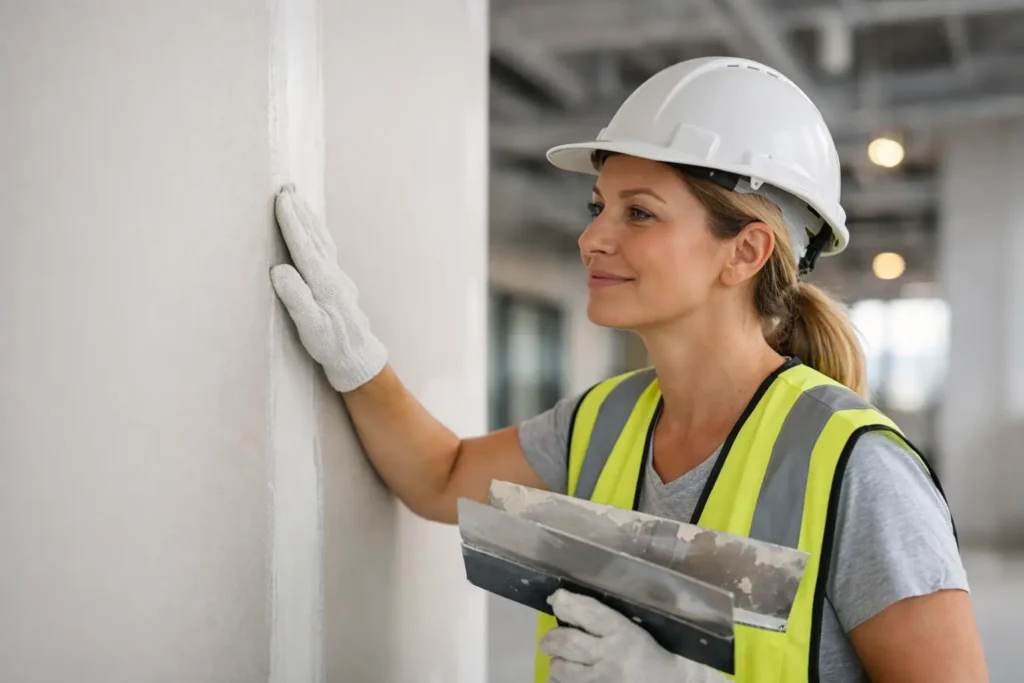
A commercial space can have great lighting, clean lines, and solid construction, but if the walls and ceilings are poorly finished, everyone notices. Commercial drywall finishing is one of those trades that quietly shapes the entire look of an interior. When it is done right, paint lays down evenly, corners stay crisp, and the space feels finished in the way clients, tenants, and inspectors expect.
That matters whether you are building out offices, updating a retail unit, repairing damage in a rental property, or getting a commercial interior ready for turnover. The finish is not just cosmetic. It affects durability, schedule, and the quality people associate with the whole job.
What commercial drywall finishing really includes
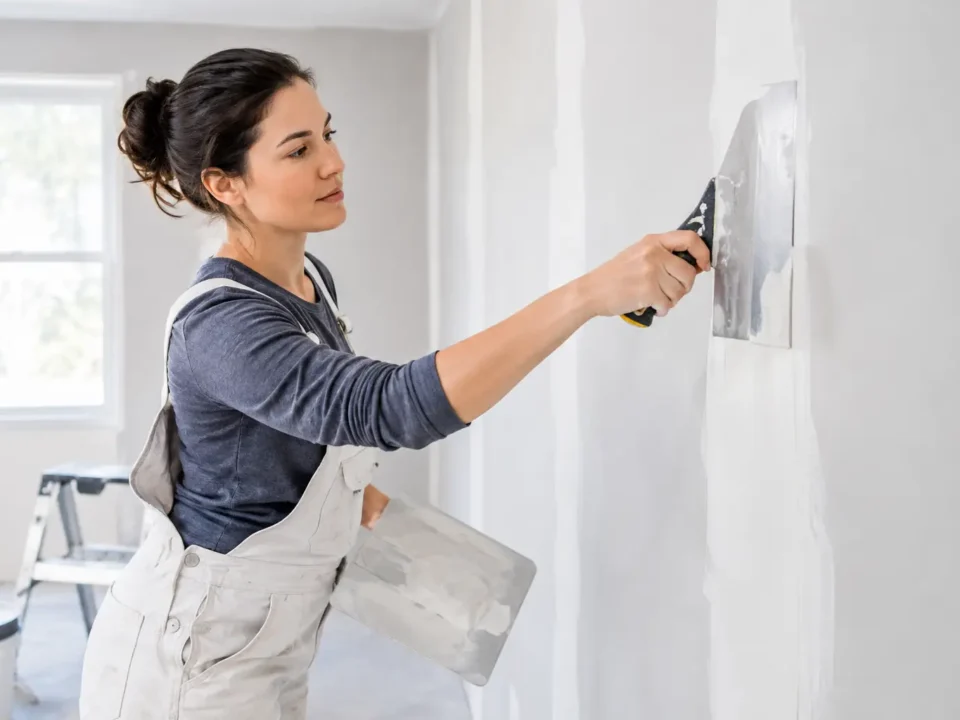
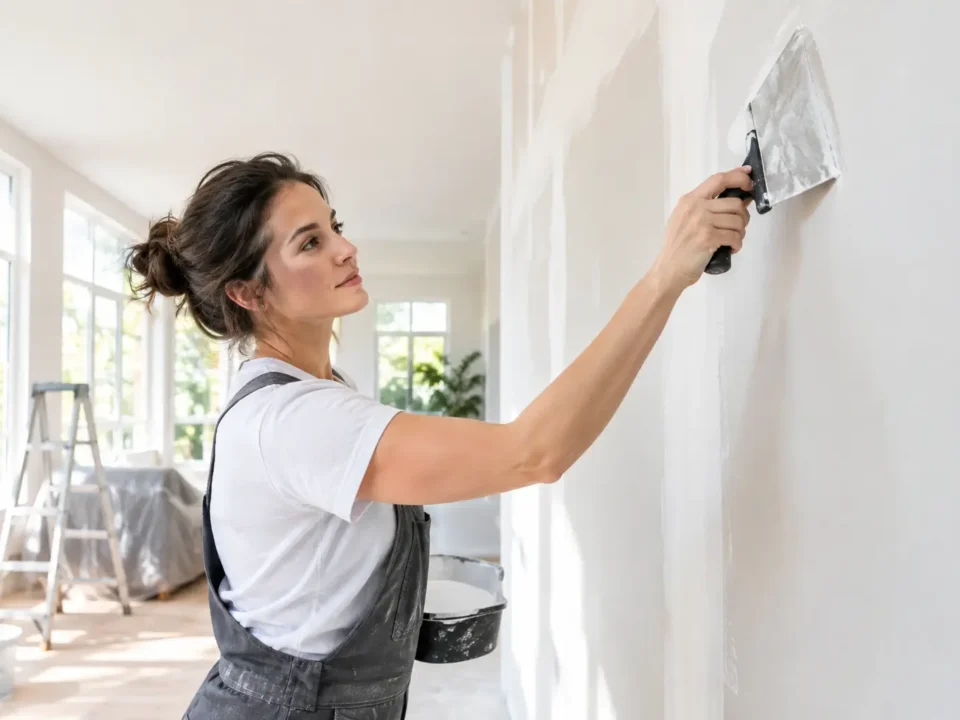
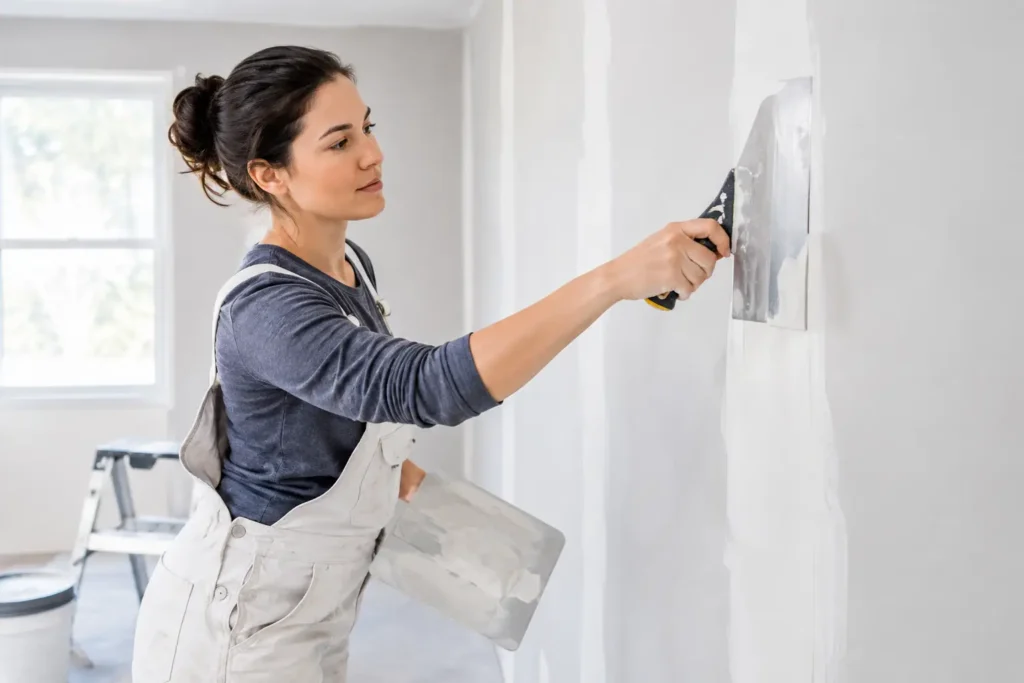
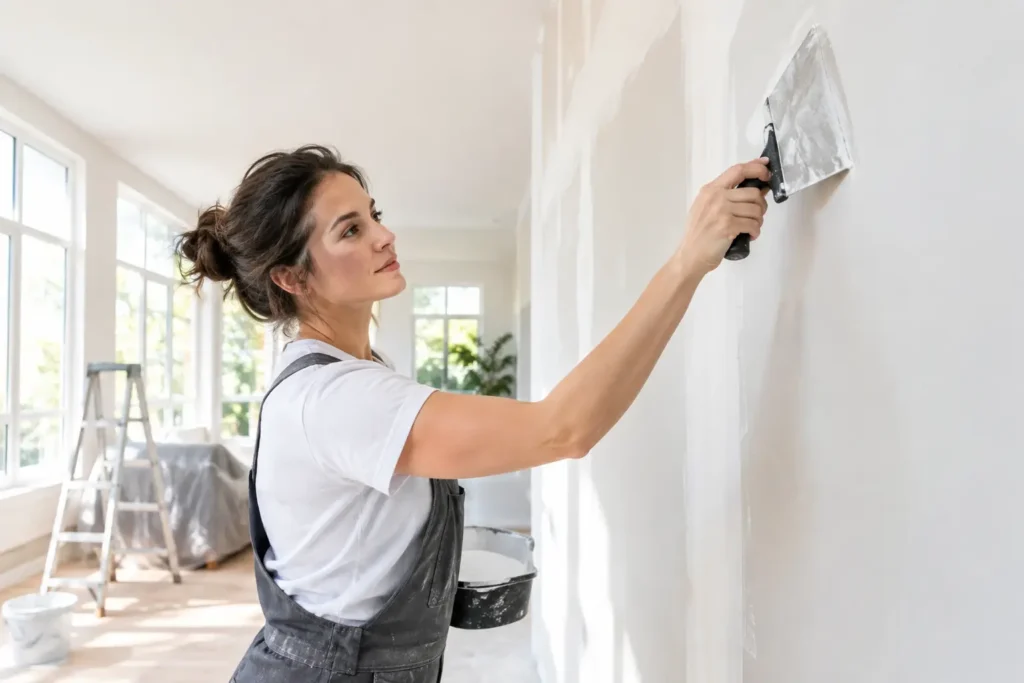
Commercial drywall finishing is more than covering joints with compound and sanding them smooth. It is the process that turns installed drywall into a continuous surface ready for primer, paint, texture, or final occupancy. That usually includes taping seams, embedding tape properly, applying multiple coats of joint compound, finishing inside and outside corners, treating fastener heads, and sanding or polishing the surface to the specified level.
In commercial settings, expectations are often higher and conditions are less forgiving. Large wall runs, long sightlines, bright lighting, and open ceilings tend to reveal flaws quickly. A small wave in a wall or a poorly feathered seam might pass unnoticed in a storage room, but not in a lobby, medical office, conference room, or retail front.
This is also where finish level matters. Not every commercial job needs the same standard. Some spaces are fine with a basic finish hidden behind texture or limited visibility. Others need Level 4 or Level 5 because flat paint, strong light, and premium design leave no place to hide imperfections.
Why the finish level changes the final result
A common mistake on commercial jobs is treating all drywall finishes as if they are interchangeable. They are not. The right finish level depends on the design intent, lighting, wall location, and final coating.
Level 4 is a solid choice for many painted interiors. It provides a smooth, professional surface when conditions are reasonably controlled and the paint system is not overly unforgiving. In many offices, corridors, and standard commercial rooms, it performs well.
Level 5 is different. It adds a skim coat or equivalent surface treatment across the entire board face, not just the joints and fasteners. That extra step helps minimize visible surface variation under critical lighting and improves the look of high-end painted finishes. If a commercial project includes large walls with natural side light, glossy paint, or a premium architectural feel, Level 5 is often the smarter investment.
The trade-off is simple. Higher finish levels cost more in labor and time, but they can prevent expensive disappointment after paint goes on. Reworking visible defects late in the project almost always costs more than finishing correctly from the start.
Where commercial projects usually go wrong
Most drywall finishing problems do not start with the final coat. They begin earlier, with rushed scheduling, poor board installation, or unrealistic expectations about what finishing can correct.
If drywall is hung with misaligned seams, damaged edges, loose fasteners, or framing irregularities, the finisher has to fight the surface from day one. A skilled crew can improve a lot, but finishing is not magic. It cannot fully hide poor substrate conditions without added labor, and that should be discussed honestly before the work begins.
Moisture and temperature also matter more than many people realize. Joint compound needs proper drying conditions. If the building is too cold, too damp, or poorly ventilated, drying slows down and defects become more likely. On fast-track commercial jobs, this often creates pressure to move too quickly between coats. The result can be shrinkage, cracking, flashing, or a surface that looks uneven after primer.
Lighting is another issue that gets overlooked until the end. Ceiling fixtures, wall washers, storefront glass, and daylight can expose every seam and patch. That is why experienced contractors think about light direction before they choose a finish level or approve a surface as ready for paint.
What quality commercial drywall finishing looks like
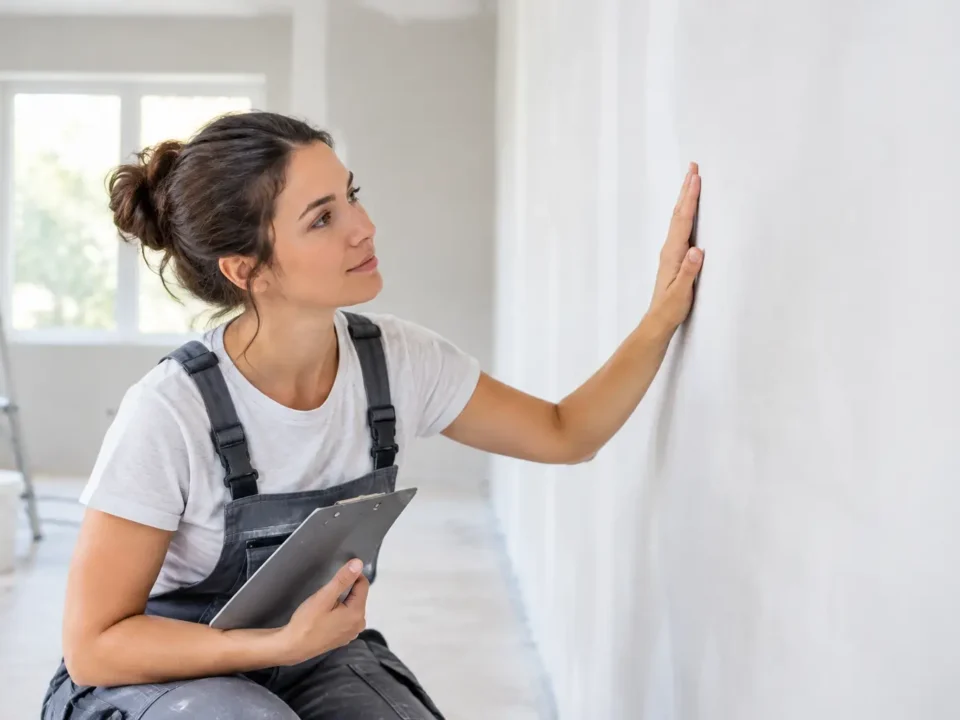
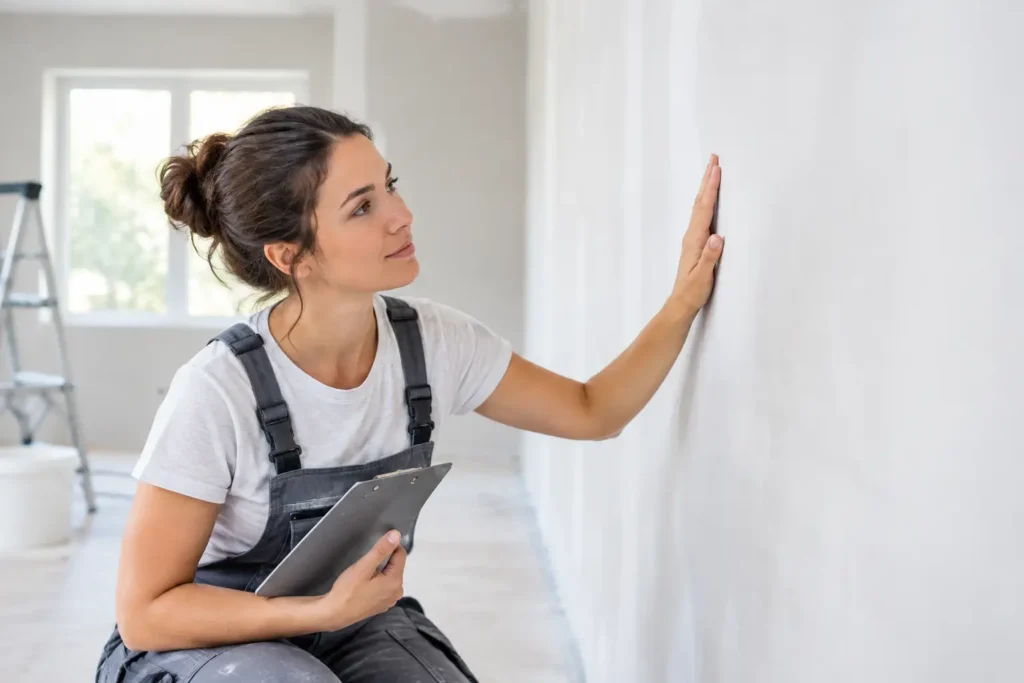
Good finishing has a clean, consistent look, but the real standard is deeper than that. Seams should disappear into the field of the wall. Corners should look straight and sharp without excessive buildup. Fastener spots should be invisible after primer and paint. Sanding should leave the surface smooth without fuzzing the paper or scarring the board.
Consistency matters just as much as smoothness. On a commercial project, one perfect wall and three average ones is not a good result. The finish needs to hold up across the whole space, including bulkheads, ceilings, soffits, patched sections, and transitions between old and new work.
A quality crew also protects the schedule. That means planning coats properly, spotting issues early, coordinating with painters and other trades, and handling touch-ups before they become handoff problems. Reliable drywall finishing is not just about hand skill. It is about jobsite discipline.
Commercial drywall finishing for new work and repairs
New construction and renovation work do not have the same demands. In new commercial interiors, the goal is usually consistency across large areas. Production matters, but so does maintaining standards room after room. Small imperfections become repetitive patterns if they are not corrected early.
Repair work is a different kind of challenge. Water damage, impact damage, cut-outs from electrical or plumbing work, and tenant improvement changes often leave patched areas that need to blend into existing surfaces. This can be harder than finishing brand-new board. Matching texture, flattening old transitions, and avoiding visible patch outlines takes patience and a trained eye.
That is one reason specialized crews are valuable on commercial properties. A contractor who only wants large open jobs may not be the right fit for urgent repairs, isolated damage, or mixed-scope work. Property managers and business owners often need someone who can handle both full-area finishing and smaller problem spots without treating either one as an inconvenience.
Why ceilings are often the hardest part
Walls get attention, but ceilings usually demand the highest level of precision. Every seam, wave, and patch is easier to spot overhead, especially under direct lighting. Smooth ceilings in commercial spaces leave no margin for sloppy work.
This becomes even more important when older acoustic or popcorn textures are removed. Once a textured ceiling is flattened, the surface underneath has to be corrected carefully. Any old repair lines, uneven joints, or sanding marks can show through immediately after painting.
For offices, retail areas, and updated commercial interiors, a smooth ceiling can completely change the space. It looks cleaner, brighter, and more current. But it only works when the finishing is done with that end result in mind.
Choosing the right contractor for commercial drywall finishing
The best choice is not always the lowest number on the quote. Commercial drywall finishing should be judged on scope clarity, finish level understanding, response time, and consistency of workmanship.
A good contractor should be able to explain what is included, what finish level fits the project, and what conditions need to be in place for proper results. They should also be direct about limitations. If lighting conditions call for Level 5, saying Level 4 is good enough just to win the job does not help the client.
It also helps to work with a crew that can adapt. Some projects need full finishing packages. Others need ceiling repairs, emergency patching, or smaller touch-ups to keep a move-in or reopening on schedule. In busy service areas like Niagara, St. Catharines, and Hamilton, that flexibility can make a real difference for commercial clients trying to avoid downtime.
TH Taping is built around that kind of practical support – precise finishing, clear communication, and the ability to take on both larger projects and smaller urgent work when timing matters.
The cost question everyone asks
Commercial clients usually want the same answer first: how much will it cost? The honest answer is that price depends on surface condition, finish level, access, ceiling height, repair complexity, and schedule pressure.
A straightforward new-build area with good board installation is one thing. A high-visibility renovation with difficult lighting, after-hours access, patchwork repairs, and premium paint expectations is another. They should not be priced the same, and they rarely perform the same if treated as though they are.
What matters more than finding the cheapest number is understanding the cost of rework. If walls need to be reskimmed after paint, if patches flash through in tenant areas, or if turnover is delayed because surfaces are not ready, the original savings disappear fast.
Commercial drywall finishing pays off when it is approached as part of the final quality of the space, not just a line item to squeeze. Clean walls and ceilings support every finish that comes after them.
If you are planning a commercial build-out, dealing with repairs, or trying to bring an interior up to a higher standard, pay close attention to the finishing stage. It is one of the last trades to touch the surface, and one of the first things people notice when they walk in.