
What a Drywall Finishing Contractor Does

Drywall Taping Services That Look Right
22 mayo, 2026
Commercial Drywall Finishing That Holds Up
24 mayo, 2026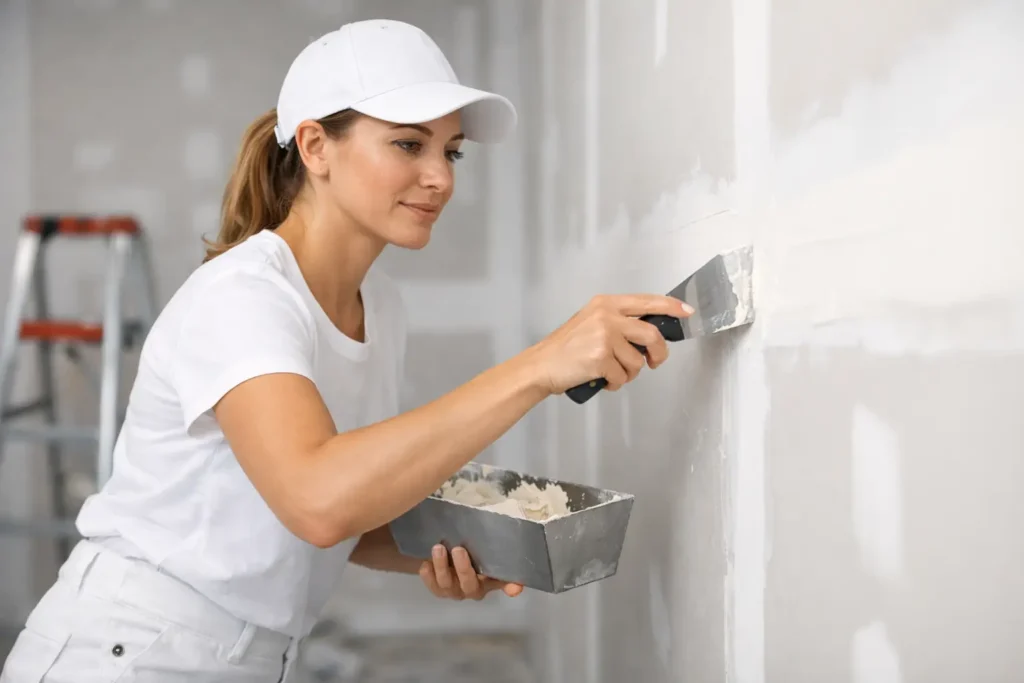
A wall can look straight from across the room and still turn into a problem the moment paint goes on. Joints show. Fasteners flash through. Ceiling lines catch light in all the wrong places. That is usually the point where a drywall finishing contractor stops being an afterthought and becomes the most important trade on the job.
If you are building, renovating, repairing damage, or getting a space ready for paint, finishing is the stage that decides whether the room looks clean or unfinished. Drywall boards create the surface, but taping and finishing create the final appearance. That distinction matters more than most people expect.
Why a drywall finishing contractor matters
Drywall finishing is not just about covering seams. It is about creating a flat, consistent surface that holds up visually under primer, paint, and lighting. Even small flaws become obvious once the room is complete, especially on ceilings, long walls, open-plan spaces, and areas with strong natural light.
A skilled drywall finishing contractor knows how to manage joint compound, tape, corner beads, fastener coverage, sanding, and final surface prep so the finished result looks intentional. That takes technique, timing, and a good eye. It also takes restraint. Overworking mud can create ridges. Sanding too aggressively can expose tape. Moving too fast between coats can lead to cracking or shrinkage.
This is why finishing has such a direct effect on the final quality of a home, office, retail unit, or renovation. The painter can only work with the surface they are given. If the finish is uneven, the paint will not hide it.
What the job actually includes
People often use drywall, taping, mudding, and finishing as if they mean the same thing. They are related, but not identical. In many projects, hanging board is one phase and finishing it is another.
A drywall finishing contractor typically handles taping the joints, applying multiple coats of compound, embedding and refining corner beads, covering screw heads, sanding between stages, and preparing the surface for primer or paint. On repair jobs, that can also mean blending patches into surrounding areas so the fix does not stand out.
The work can be straightforward or highly detailed depending on the project. A utility room has different expectations than a main living area with large windows and smooth ceilings. Commercial spaces may also require a finish that performs well under bright, uniform lighting where imperfections are easier to spot.
Level 4 and Level 5 are not the same thing
One of the biggest misunderstandings in drywall work is assuming every smooth wall is the same. It is not. The required finish level changes based on the space, the lighting, and the final appearance you want.
Level 4 is common for many painted walls and standard interior spaces. It provides a clean, paint-ready surface when conditions are fairly forgiving. For many rooms, that is the right choice.
Level 5 is a higher-end finish that includes an additional skim coat or equivalent treatment across the surface. It is often the better fit when you have critical lighting, dark paint, smooth ceilings, premium interiors, or spaces where visual consistency matters a great deal. It costs more and takes more labor, so it is not automatically necessary everywhere. But in the right setting, it can make the difference between a finish that looks acceptable and one that looks sharp from every angle.
That is where honest guidance matters. A good contractor does not push the highest level on every wall. They explain where it is worth it and where it may not be necessary.
Repairs are harder than they look
Small drywall damage seems simple until someone tries to make it disappear. Nail pops, cracks, water stains, cutouts from plumbing or electrical work, dented corners, and patched holes all need more than filler if you want a clean result.
The challenge with repairs is not just closing the opening. It is matching the surrounding surface so the repair does not announce itself later. Texture differences, uneven sanding, flashing under paint, and poor feathering are what usually give a patch away.
A drywall finishing contractor approaches repairs with that final look in mind. Sometimes the fix is limited to one section. Sometimes the surrounding area needs broader blending so the repaired spot disappears once painted. The right scope depends on the damage, the existing finish, and how visible the area will be.
Ceilings are where finishing quality really shows
Walls get attention, but ceilings expose finishing mistakes quickly. Popcorn ceiling removal is a common example. Once the old texture comes down, the surface underneath often needs substantial work before it can become a clean smooth ceiling.
That can include patching damaged areas, correcting uneven sections, retaping joints, and applying fresh coats to create a uniform plane. The same is true after water damage or partial ceiling repairs. If the finishing is inconsistent, ceiling light will find every defect.
For homeowners updating older interiors, this is often where professional finishing has the biggest visual payoff. A clean ceiling changes the whole room.
When hiring a specialist makes the most sense
Some projects can tolerate a basic finish. Others cannot. If the room is highly visible, if you are paying for premium paint, if your walls get strong daylight, or if the project needs to move cleanly toward final inspection and paint, hiring a specialist usually saves time and frustration.
That is especially true for remodelers, general contractors, and property managers who need reliable turnaround. A delayed finish affects every trade that follows. It can slow painting, trim, flooring protection, final cleaning, and occupancy.
It also matters on small urgent jobs. A damaged ceiling before a sale, a wall cut open for emergency plumbing, or a repair needed between tenants may not be a large project, but it still needs to look right. One advantage of working with a company focused on finishing is that small jobs and emergency work are part of the service, not an inconvenience.
What to look for in a drywall finishing contractor
The first thing to look for is consistency in the finished surface, not just photos of work in progress. Anyone can show compound on a wall. What matters is whether the final result looks flat, clean, and ready for paint.
You also want clarity about scope. Does the quote include taping, multiple coats, sanding, corner work, patch blending, and paint-ready prep? Does it specify the finish level if that matters to the project? Clear communication early prevents frustration later.
Responsiveness matters too. Finishing work is often tied to schedules that cannot drift. Whether the project is a full residential build, a commercial unit, or a single repair, it helps to work with a team that communicates clearly and shows up ready to move the job forward.
In areas like Niagara, St. Catharines, and Hamilton, clients often need that mix of quality and flexibility because project types vary widely. Some jobs are full renovations. Others are quick repairs that still need a professional standard.
The cheapest price can cost more later
Drywall finishing is one of those trades where shortcuts tend to show up at the very end, when fixes are more annoying and more expensive. A low quote may leave out important prep, enough coats, detailed sanding, or proper blending. The room may seem done until primer goes on and the flaws become obvious.
At that point, correction work can affect the schedule, the painter, and the budget. In occupied homes or active commercial spaces, it can also create extra mess and disruption that could have been avoided.
Paying for good finishing is really paying for fewer visible problems later. That is why experienced clients look beyond square-foot pricing and ask about standards, process, and expected results.
A better finish changes the whole space
People notice cabinets, flooring, tile, and paint color first. But the surfaces underneath all of that are what make a room feel crisp and complete. When walls and ceilings are finished properly, the entire space reads as higher quality.
That is true whether you are repairing one damaged section or finishing an entire project to a Level 5 standard. The goal is the same: surfaces that look clean, hold up visually, and let the rest of the room shine.
If you are planning work and want the final result to look right the first time, the finishing stage is not where to compromise. A dependable drywall finishing contractor is there to help turn rough surfaces into clean, ready-for-paint walls and ceilings that actually finish the job.