
What Causes Ceiling Stains? Find the Source

Hamilton Office Drywall Restoration That Lasts
10 septiembre, 2026
Tenant Turnover Wall Repair That Rents Faster
14 septiembre, 2026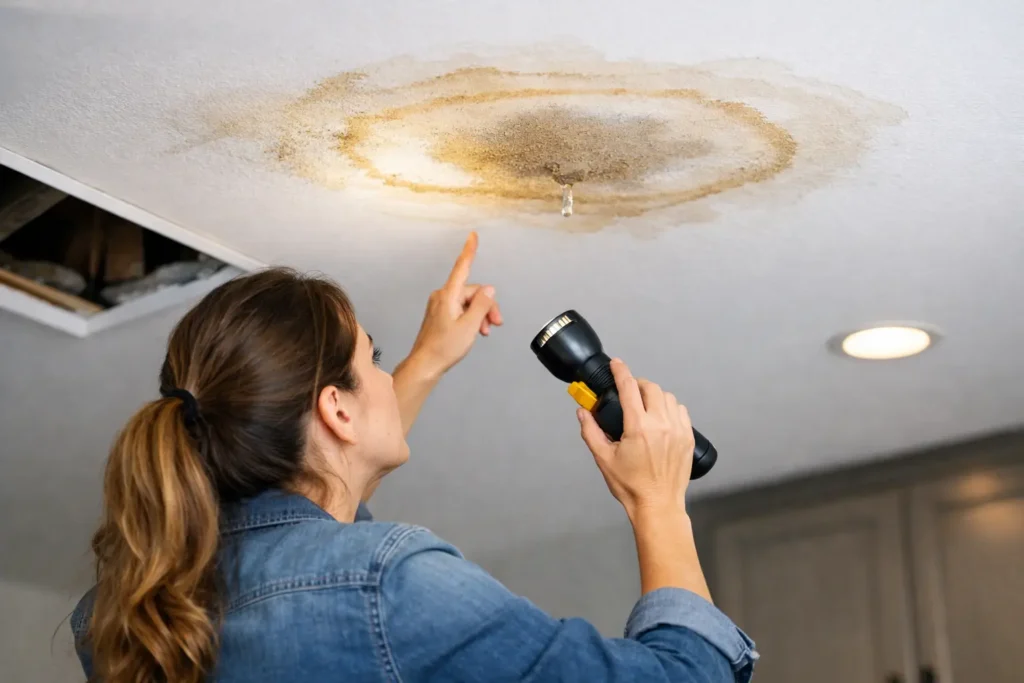
A brown ring over a bathroom light or a faint yellow patch near an exterior wall is more than a paint problem. What causes ceiling stains is often hidden above the drywall, and painting over the mark before finding the source can leave you with a larger repair later.
Some stains come from a one-time plumbing issue. Others point to slow roof leaks, condensation, attic moisture, or smoke residue that has built up over time. The pattern, location, texture, and timing of the stain can help narrow down the cause. The right repair starts by stopping the problem, allowing the area to dry completely, and then restoring the ceiling so the finished surface looks clean again.
What Causes Ceiling Stains in Most Homes?
Water is the most common cause, but it is not the only one. A ceiling stain develops when moisture, airborne particles, or materials inside the ceiling move through the paint and drywall surface. In many cases, the visible mark is smaller than the area affected behind it.
The color can offer a clue. Yellow, tan, or brown stains often come from water carrying dust, wood tannins, rust, or other contaminants. Gray or black spotting may be related to moisture and possible mold growth, although a visual inspection alone cannot identify the exact type. Dark, dusty-looking discoloration around vents or above cooking areas can be soot or airborne residue.
Roof leaks and flashing failures
A stain near the top floor, along an exterior wall, around a chimney, or below a roof valley may point to a roof issue. Missing shingles, worn flashing, damaged vent boots, ice dams, and blocked gutters can allow water into the roof assembly.
Roof leaks are not always obvious during every rainfall. Wind direction, snow melt, and the volume of rain can change where water travels. It may enter at one point and appear several feet away on the ceiling. That is why the stain itself is a clue, not proof of the precise leak location.
Plumbing leaks above the ceiling
If the stain sits below a bathroom, kitchen, laundry room, or mechanical space, plumbing should be high on the list. A loose drain connection, failed shower pan, leaking supply line, overflowing fixture, or condensation on cold pipes can all affect the drywall below.
These leaks can be slow and intermittent. You may notice the stain getting darker after showers, laundry cycles, or dishwasher use. A soft ceiling, bubbling paint, or a stain that grows quickly calls for prompt attention. Wet drywall can lose strength, sag, and eventually fall.
Condensation and poor ventilation
Moisture does not have to come from a leak. Bathrooms, kitchens, and laundry areas create humidity, especially in colder months. When warm humid air hits a cold ceiling surface, attic duct, pipe, or exterior corner, condensation can form.
This issue often appears as faint staining, peeling paint, or recurring dark spots rather than one large water ring. An exhaust fan that vents into the attic instead of outdoors can create major moisture problems. So can insufficient attic insulation, air leaks around ceiling penetrations, or a fan that is too small for the room.
Attic moisture and insulation issues
On upper-level ceilings, attic conditions matter. Warm indoor air can escape through recessed lights, attic hatches, plumbing penetrations, and gaps around fixtures. Once that air reaches the cold attic, it can condense on roof sheathing or framing and later drip onto the insulation and ceiling.
A roof may be in good condition while the ceiling below still stains because attic ventilation, insulation, or air sealing needs correction. This is a common example of why a cosmetic ceiling patch alone is not enough. If the moisture cycle continues, the same stain can return.
Smoke, soot, and cooking residue
Not every ceiling stain feels damp. Smoke from candles, fireplaces, tobacco, cooking, or a past fire can leave gray, black, or yellowish residue. Gas appliances that are not venting properly may also contribute to soot-like marks.
These stains often collect near ceiling corners, around supply vents, above light fixtures, or in rooms with limited ventilation. Before repainting, the surface needs proper cleaning and preparation. Otherwise, residue can bleed through fresh paint or prevent it from bonding well.
Old repairs, rust, and drywall fasteners
Small circular brown spots can appear where drywall fasteners have rusted. This can happen after past moisture exposure, high humidity, or when fasteners were not properly coated during finishing. Nail pops and joint cracks may show up nearby as the framing and drywall move over time.
A stain around an old patch can also signal that the repair was never fully sealed, primed, or blended. The problem may be only cosmetic, but it still needs a careful inspection. A smooth-looking ceiling depends on stable, dry drywall beneath the finish.
How to Read the Stain Before You Repair It
Start by looking for changes. Is the stain growing, darkening after rain, or appearing after someone uses a shower? Does the ceiling feel soft, swollen, cool, or damp? Is there peeling paint, a musty odor, visible spotting, or a sagging section?
A fresh, active stain needs investigation before drywall work begins. If water is dripping, a ceiling is bulging, or electrical fixtures are nearby, treat it as urgent. Move belongings out of the area, avoid touching wet electrical components, and arrange for the source to be addressed as soon as possible.
For a stain that appears old and completely dry, it is still worth checking what is above it. Review the room layout, inspect accessible plumbing and attic areas, and consider recent storms or past water events. A professional may need to open a limited section of drywall to confirm the condition inside. That is usually better than covering a hidden issue and hoping it stays gone.
Why Painting Over a Ceiling Stain Usually Fails
Standard ceiling paint is not designed to block water marks, smoke residue, or tannins. Even if the ceiling looks white immediately after painting, the discoloration can migrate through the new coat. If moisture remains, paint may blister, peel, or develop new staining.
The repair sequence matters. First, correct the roof, plumbing, ventilation, or condensation issue. Next, let the framing, insulation, and drywall dry fully. Damaged or weakened drywall should be removed and replaced rather than skimmed over. Once the area is stable, the patch can be taped, finished, sanded, primed with the appropriate stain-blocking product, and painted.
The level of finish should match the rest of the ceiling. In rooms with smooth ceilings, broad natural light, or a premium paint finish, even a small patch can stand out if the texture, feathering, or sanding is rushed. A properly blended repair creates a flat surface that does not announce where the damage used to be.
When a Ceiling Stain Needs Professional Repair
Small, old stains with no softness or ongoing moisture may only require preparation and repainting. But professional help is the practical choice when the stain keeps coming back, the drywall is sagging, there is visible cracking or bubbling, or the affected area is large.
It also makes sense to bring in a drywall finishing specialist after a plumber or roofer has fixed the source. Clean demolition, replacement drywall, strong tape work, and a smooth finish are what turn a necessary repair into a ceiling that looks complete again. This is especially valuable in living rooms, kitchens, hallways, and commercial spaces where every surface is easy to see.
For homeowners and property managers in Niagara, St. Catharines, and Hamilton, TH Taping can repair damaged ceiling drywall and deliver a clean, paint-ready finish after the moisture issue has been resolved.
A ceiling stain is your home asking for attention. Find the source first, give the structure time to dry, and restore the surface only when it is ready for a repair built to last.