Hamilton Office Drywall Restoration That Lasts

Water Damage Repair Case Study: Ceiling Restored
8 septiembre, 2026
What Causes Ceiling Stains? Find the Source
12 septiembre, 2026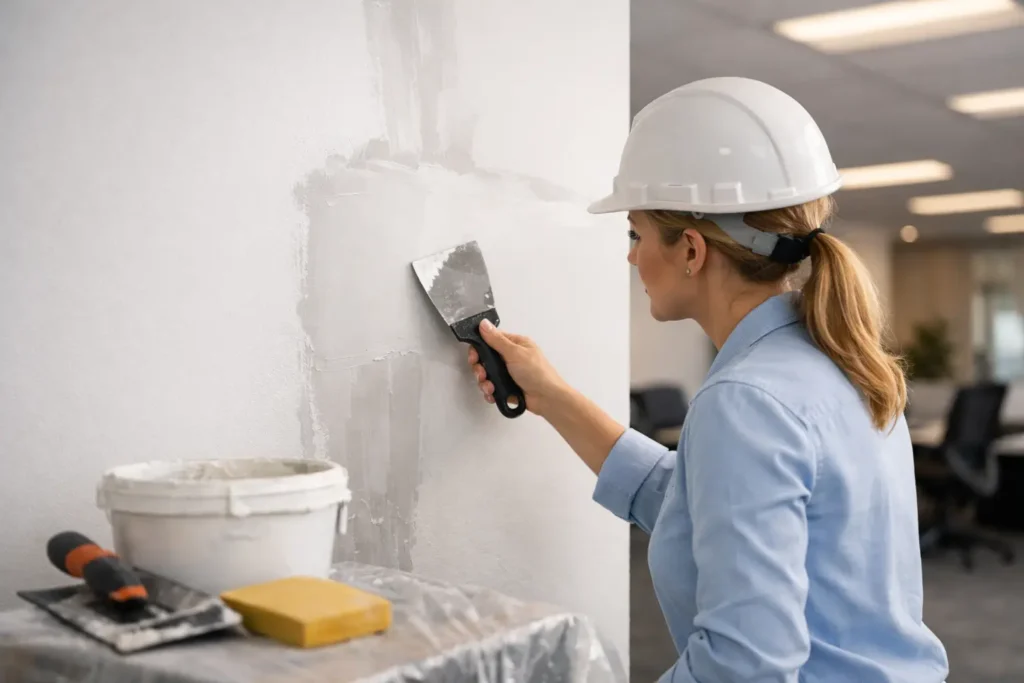
A damaged office wall changes how a space feels before anyone says a word. Scuffs, cracks, water stains, popped fasteners, and uneven patches can make an otherwise well-run business look neglected. Hamilton office drywall restoration gives property managers, business owners, and contractors a practical way to bring those surfaces back to a clean, professional standard without disrupting more of the building than necessary.
The right solution depends on the damage, the wall finish, and what the office needs next. A small impact hole may only need a precise patch and repaint. A water-damaged section may require removal, drying, replacement, and careful finishing to avoid future problems. The goal is not simply to cover damage. It is to create a smooth, durable surface that looks right under office lighting and holds up to daily use.
Start With the Cause, Not Just the Surface
Drywall damage is often visible long before its source is understood. In a commercial office, common causes include moving furniture, door handles, tenant changes, plumbing leaks, HVAC condensation, settling, and previous repairs that were rushed or poorly finished.
A clean-looking patch over an active moisture issue will not last. If a stain is still spreading, the drywall feels soft, or there is a musty odor, the area needs to be assessed before finishing begins. The leak or humidity issue should be resolved first, then damaged materials can be removed and restored properly.
Cracks also deserve a closer look. Fine hairline cracks around doors, corners, or ceiling lines can come from normal movement and may be repairable with the right preparation, tape, compound, and finish work. Wider cracks, repeated cracking, or movement around structural openings can point to a larger issue. In those cases, restoration should be coordinated with the appropriate building professional before cosmetic work moves forward.
When a Repair Is Enough
Not every damaged wall needs to be replaced. Targeted drywall repair is often the most efficient option when the surrounding board is dry, solid, and stable. This is especially useful in occupied offices where minimizing dust, noise, and downtime matters.
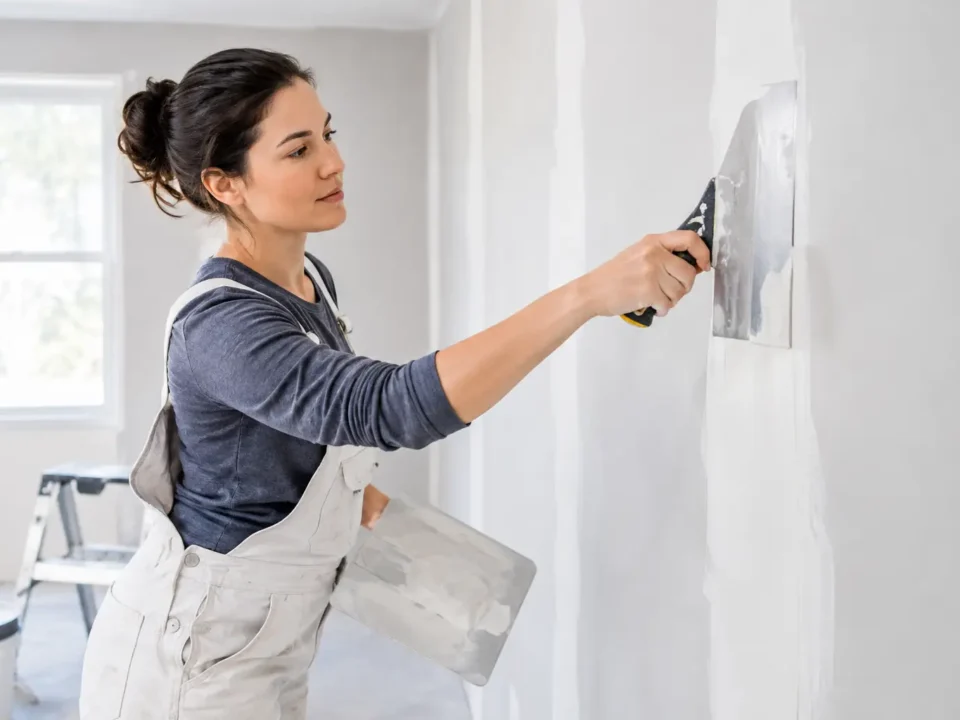
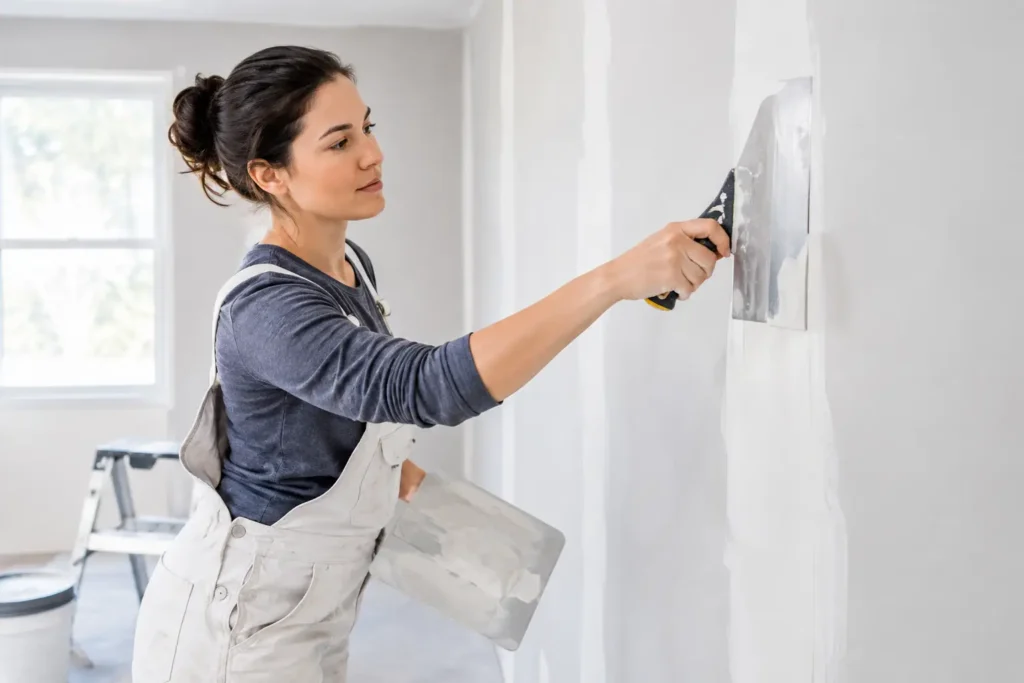
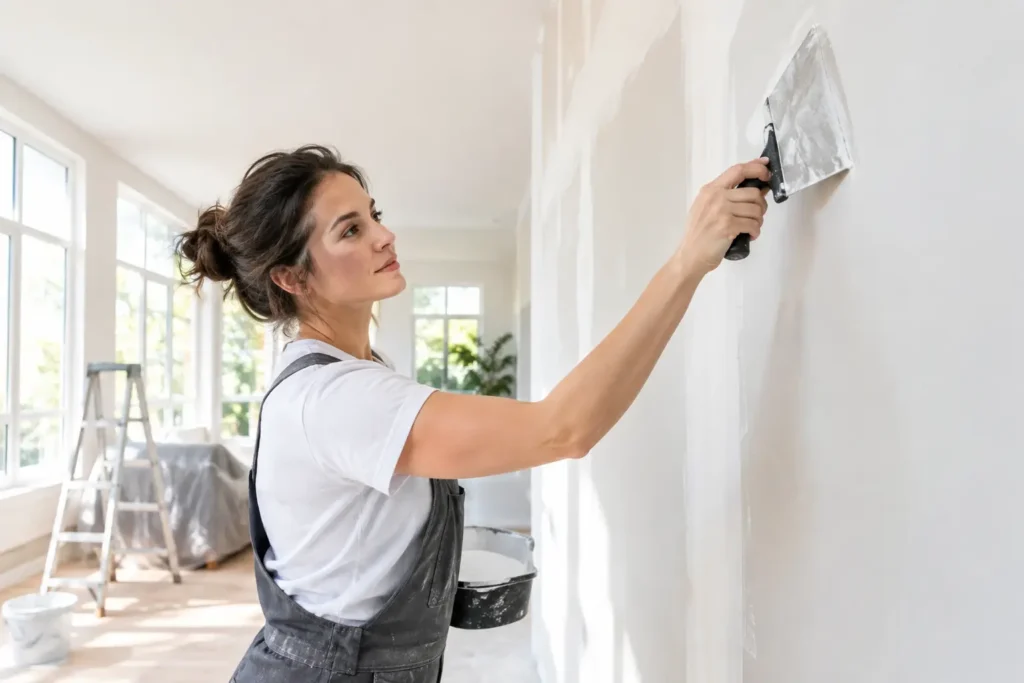
Small holes, nail pops, corner damage, dents, and isolated cracks can usually be repaired with a properly fitted patch or reinforcement. The repaired area is then taped, coated, sanded, and blended into the surrounding wall. The details matter here. A patch that is technically filled but not feathered wide enough can show through paint, especially beside windows, in hallways, or under direct LED lighting.
For a repair to disappear visually, the contractor has to match more than the wall color. They need to match the surface plane, texture, corner profile, and sheen expectations of the room. This is why office restoration is not a good place for thick compound, visible mesh, or a quick paint-over.
When Replacement Makes More Sense
Replacement becomes the better choice when drywall has lost its strength or cleanliness. Water saturation, mold concerns, crumbling gypsum, extensive delamination, or multiple failed repairs can make patching a false economy.
In a commercial setting, replacement may also make sense when a wall has been opened for electrical, plumbing, data wiring, or HVAC work. Rather than leaving a chain of small patches across a visible wall, replacing a larger section can produce a straighter, cleaner finish. It can also be the more efficient route when damage runs behind baseboards, across corners, or close to door frames.
There is a trade-off. Replacement involves more material removal and can require added coordination with painters, electricians, or building management. But it provides a sound surface for a long-lasting finish when the existing board is no longer worth saving.
Hamilton Office Drywall Restoration Needs the Right Finish Level
A restoration can be structurally sound and still look unfinished if the final surface level does not suit the room. Office walls are often painted in eggshell, satin, or other finishes that reflect light more than flat paint. That reflection makes ridges, seams, and sanding marks much easier to see.
For many offices, a Level 4 finish is the practical standard. Joints, fasteners, and accessories receive multiple coats of joint compound, followed by careful sanding for a paint-ready surface. It works well for most standard wall paints and typical office conditions.
A Level 5 finish is worth considering for feature walls, executive offices, reception areas, boardrooms, corridors with strong side lighting, and walls finished with darker or higher-sheen paint. It adds a skim coat across the full surface to create a more uniform appearance. The additional labor is an investment, but it can prevent the distracting shadow lines and visible imperfections that show up after painting.
The best choice depends on the light, paint selection, wall location, and visual expectations. A storage room may not require the same finish as a client-facing reception area. Matching the finish level to the space helps control cost without lowering the standard where appearance truly matters.
Plan the Work Around Office Operations
Commercial drywall restoration should respect the way the office operates. A skilled crew can help plan repairs around access, tenant schedules, security requirements, and areas that need to remain open.
For smaller repairs, work may be completed during quieter hours or in contained sections of the office. For larger restoration projects, phased scheduling can keep teams working while repairs move through separate rooms, corridors, or floors. Dust containment, floor protection, and cleanup are not extras. They are part of doing careful work in an active professional environment.
Drying time also needs to be considered. Joint compound is applied in coats, and each coat needs appropriate drying before sanding and finishing. Rushing this process can lead to shrinkage, weak repairs, or visible seams later. A realistic schedule protects the final result and makes it easier for painters or other trades to plan their work.
What a Quality Restoration Process Looks Like
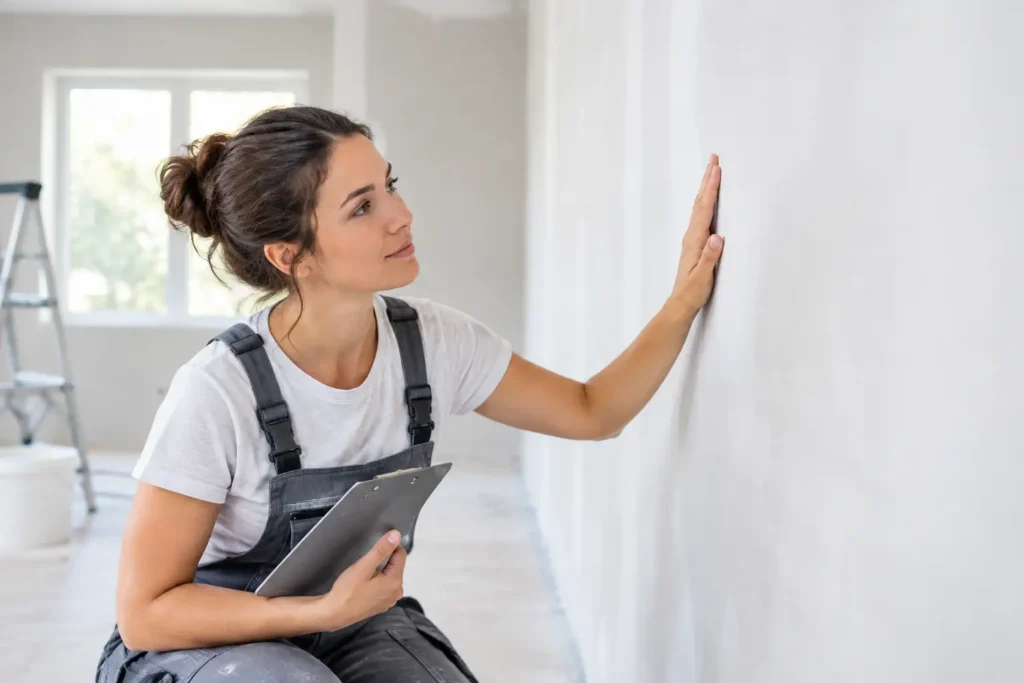
The best drywall repairs follow a clear sequence rather than relying on a fast cosmetic fix. First, the damaged area is inspected and any moisture or underlying issue is addressed. Loose or compromised drywall is removed, and the opening is stabilized with proper backing where needed.
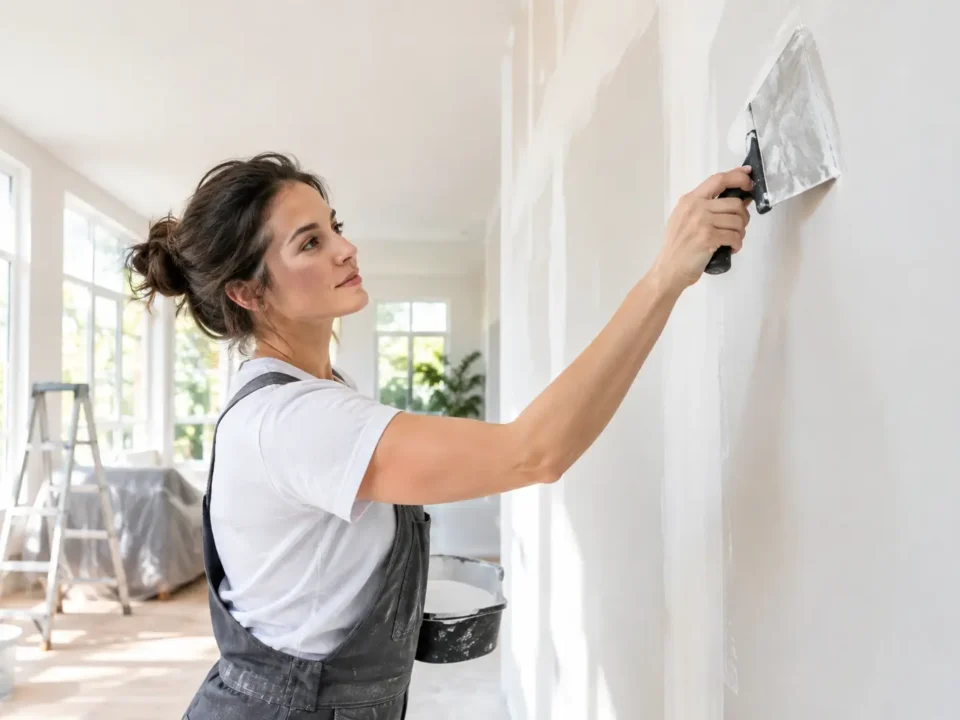
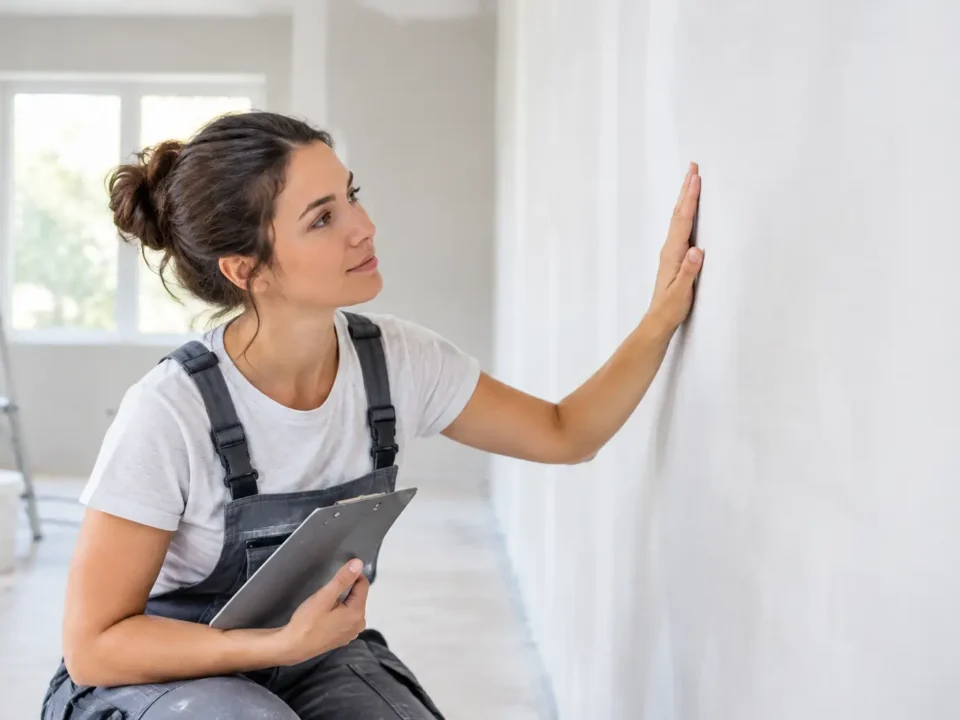
Next comes taping and finishing. Joints and patches are reinforced, coated in controlled layers, and feathered beyond the immediate repair area. Corners and edges are rebuilt so they look straight and durable, not rounded over with excess compound. After sanding, the surface is checked under natural and artificial light, because lighting often reveals imperfections that are missed at first glance.
The final step is preparation for paint. The wall should be clean, smooth, and free from dust or loose material. If texture needs to be matched, that work should be completed before paint is applied. A professional restoration leaves the painter with a surface that is ready for finish coats, not a repair that needs more correction.
Avoid the Shortcuts That Create Repeat Repairs
Office managers often inherit walls that have been repaired more than once. The same areas fail again because the original job skipped the steps that create durability. Common shortcuts include filling holes without backing, taping over damp drywall, applying compound too thickly, sanding before the material has dried, or repainting without correcting texture and surface flaws.
Another common issue is treating every crack as a simple fill job. Cracks at drywall joints need proper reinforcement. Fastener pops need the board secured before the surface is refinished. Water stains need the source resolved. Each problem has a different fix, and a professional assessment prevents a repair from becoming a recurring maintenance item.
Restore the Space Without Overcomplicating It
Whether the project involves one damaged partition or several offices after a renovation, the right drywall work brings order back to the space. TH Taping provides detailed taping, finishing, patching, and repair work for commercial surfaces that need to look clean and ready for business.
If your Hamilton office has visible wall damage, water-stained drywall, rough patches, or seams that show through paint, address it before the issue spreads or affects the impression your space makes. A precise restoration can make the room feel maintained, professional, and ready for the people who use it every day.