
Can Drywall Cracks Come Back After Repair?

Drywall Taping Versus Skim Coating
2 julio, 2026
7 Best Drywall Finishing Techniques
4 julio, 2026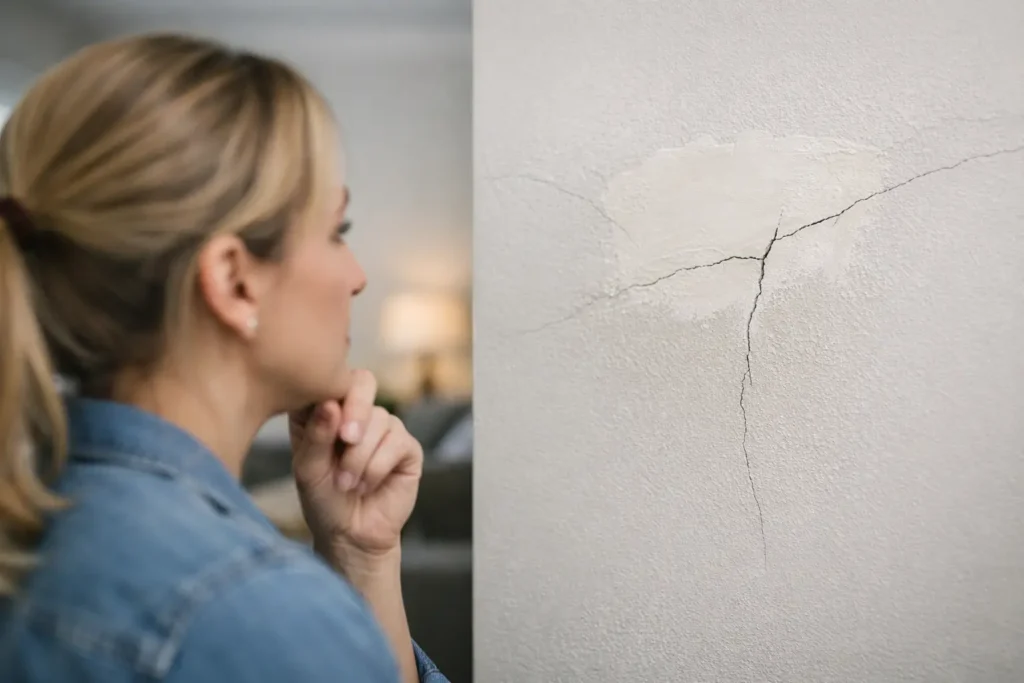
A wall looks fine after patching, then a thin line shows up again a few months later – sometimes in the exact same spot. If you are wondering, can drywall cracks come back, the honest answer is yes. They can. But when they do, it usually means the original cause was never fully addressed, or the repair was too light for the movement happening behind the surface.
That matters because not every crack is the same. Some are simple cosmetic flaws from normal settling. Others point to repeated stress at seams, framing movement, moisture issues, or weak patch work. A clean repair is not just about covering the line. It is about making sure the surface stays smooth after the paint dries and the seasons change.
Can drywall cracks come back if they were repaired right?
Sometimes even a decent-looking repair fails because drywall moves more than people expect. Houses expand and contract with temperature swings. Framing lumber dries out and shifts. Newer homes often settle during the first few years. In high-traffic areas, doors slamming or vibration can also stress seams and corners.
So yes, drywall cracks can come back even after repair, but that does not mean every return crack was unavoidable. In many cases, the issue is the method. If someone filled a moving seam with basic spackle and painted over it, the crack may disappear for a short time and then print right back through. A longer-lasting repair usually needs reinforcement, proper joint compound buildup, sanding, and enough drying time between coats.
The location of the crack also tells a story. A straight crack along a drywall joint is different from a spider crack near a door frame or a recurring corner bead crack. The surface symptom may look similar, but the reason behind it can change the repair approach.
Why drywall cracks return
The most common reason is movement. Drywall is rigid, but the structure around it is not completely still. Seasonal humidity changes, minor settling, truss uplift, and framing deflection can all put stress on taped joints.
Poor original finishing is another big one. If a seam was not taped well, if there was not enough compound over the tape, or if the joint was sanded too aggressively, that seam becomes vulnerable. It may look acceptable after paint, but the weakness is still there.
Moisture also causes repeat problems. A small roof leak, bathroom humidity, plumbing issue, or condensation problem can soften materials and weaken adhesion. If the damaged area is repaired without fixing the moisture source, the crack often returns and may bring staining or bubbling with it.
Then there is the issue of patch-only repairs. A quick fill can be appropriate for a tiny, isolated hairline crack. But if the crack is active or sits on a joint that is moving, filler alone is usually a short-term fix. It hides the symptom without strengthening the area.
Hairline crack or real repair issue?
Not every recurring crack means major trouble. Some hairline cracks are mostly cosmetic, especially in homes that go through normal settling or seasonal expansion. You may notice them where walls meet ceilings, above doors and windows, or at long seams in larger rooms.
The question is whether the crack stays small and stable or keeps reopening. If it comes back wider, spreads, or shows up with nail pops, sagging, or door alignment problems, it deserves a closer look. That is where a professional repair becomes more than a paint-prep task.
A good rule is to watch the pattern. A single fine line that returns after a year is different from multiple cracks appearing across the same wall or ceiling. Repeated cracking in the same area usually means there is movement or weakness that needs reinforcement, not just surface filling.
Can drywall cracks come back in ceilings more often?
Ceilings often show recurring cracks more clearly because they take stress from framing movement and changing temperatures in attic spaces. Long ceiling seams, transitions between wall and ceiling, and areas near stairwells or vaulted sections are common trouble spots.
If a ceiling crack was simply covered and painted, it may reappear quickly. Ceiling repairs usually need extra care because gravity works against the finish while the structure above continues to move. In some homes, what looks like a drywall problem is partly a framing issue. In others, the drywall finish itself was never built to handle the seam correctly.
This is one reason level of finish matters. A properly finished surface is not just smoother for paint. It is also more controlled in how joints are reinforced, feathered, and blended so that repairs do not flash or telegraph later.
What a longer-lasting drywall crack repair looks like
A durable repair starts with opening the crack enough to assess it instead of just smearing compound over paint. If the seam is loose, weak, or previously patched badly, the damaged material may need to be removed. Then the area should be retaped or reinforced, not merely filled.
Joint tape matters. So does compound selection. Setting-type compounds can help in some repairs because they harden differently than premixed products, but they still need to be used correctly. Rushing dry time or applying thick coats often creates shrinkage and weak spots.
Blending the repair is another place where quality shows. A professional finish feathers the area wide enough that the patch disappears under primer and paint. That is especially important on smooth ceilings and walls with direct light, where every ridge and edge becomes visible.
When the crack is tied to structural movement, the right repair may still need realistic expectations. You can greatly improve performance, but in some homes, seasonal movement may continue. The goal is to reduce the chance of return and leave a clean, stable finish, not pretend the building never moves.
When you should not ignore a returning crack
If the crack keeps reopening within weeks or months, it is worth investigating. The same goes for cracks wider than about 1/8 inch, cracks that run diagonally from doors or windows, or cracks paired with sagging, staining, or soft drywall.
Those signs can point to more than normal settling. Moisture, framing shift, loose board attachment, or repeated stress from the structure may be involved. In commercial spaces and rental properties, recurring cracks can also become a maintenance pattern that wastes time and money if the root cause is never addressed.
For property managers and contractors, this is where a finish specialist adds value. A repair that looks good on handoff but fails after the first seasonal cycle is not really a finished job. The better approach is to identify whether the problem is cosmetic, functional, or both, then repair it with the right scope.
Why some repairs look good at first and still fail
Fresh compound and paint can hide a lot. Right after a repair, the surface may appear perfectly smooth. But appearance on day one is not the real test. The real test is what happens after drying, repainting, humidity changes, and normal building movement.
This is why detail matters. Proper prep, solid taping, careful buildup, sanding, and finish consistency all affect whether the crack stays gone. It is also why quick handyman-style fixes can be hit or miss. Some small repairs hold. Others come back because the repair was designed to look finished fast, not to stay stable.
At TH Taping, that distinction matters because clients are not just paying for a patch. They want walls and ceilings that stay clean-looking, especially before painting, tenant turnover, listing a home, or completing a renovation.
The practical answer to can drywall cracks come back
Yes, they can come back. But they do not come back for no reason. Usually there is movement, moisture, weak finishing, or an underbuilt repair behind it.
The good news is that recurring cracks can often be handled the right way once the cause is understood. Sometimes that means a straightforward retape and finish. Sometimes it means a wider repair area, better reinforcement, or checking for moisture or framing issues before any finish work starts. The right solution depends on the crack pattern, location, and how the area has behaved over time.
If a crack has returned once, treat it as useful information. It is the wall telling you the first repair was not enough for what that surface is dealing with. A cleaner, more durable finish starts when the repair matches the problem – not just the line you can see.
And if you are staring at the same crack for the second or third time, that is usually the moment to stop patching it like a paint blemish and repair it like a drywall issue.