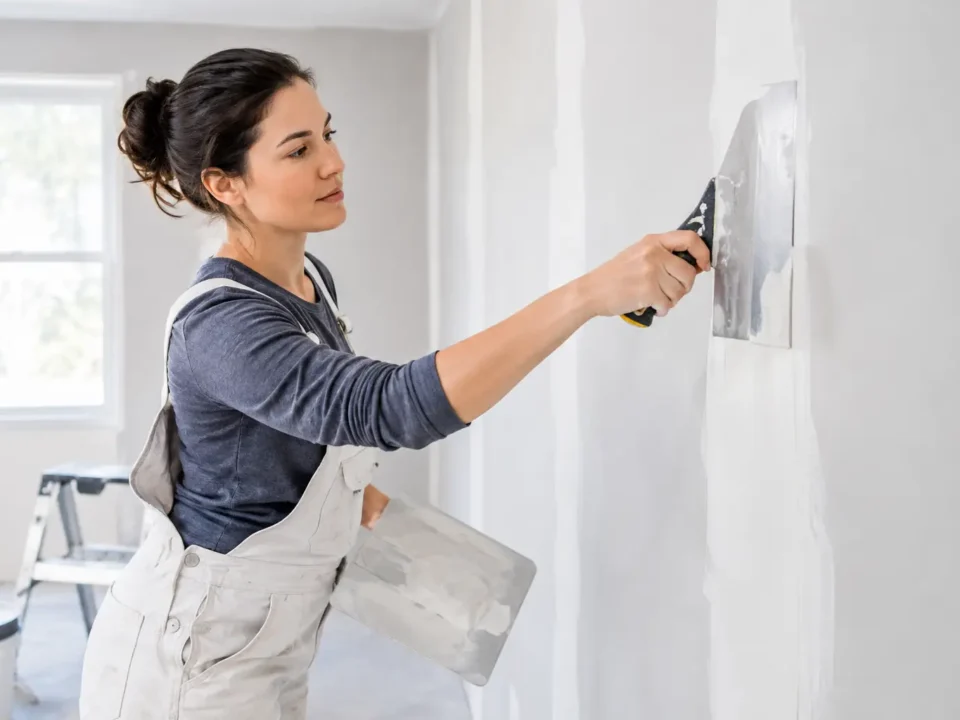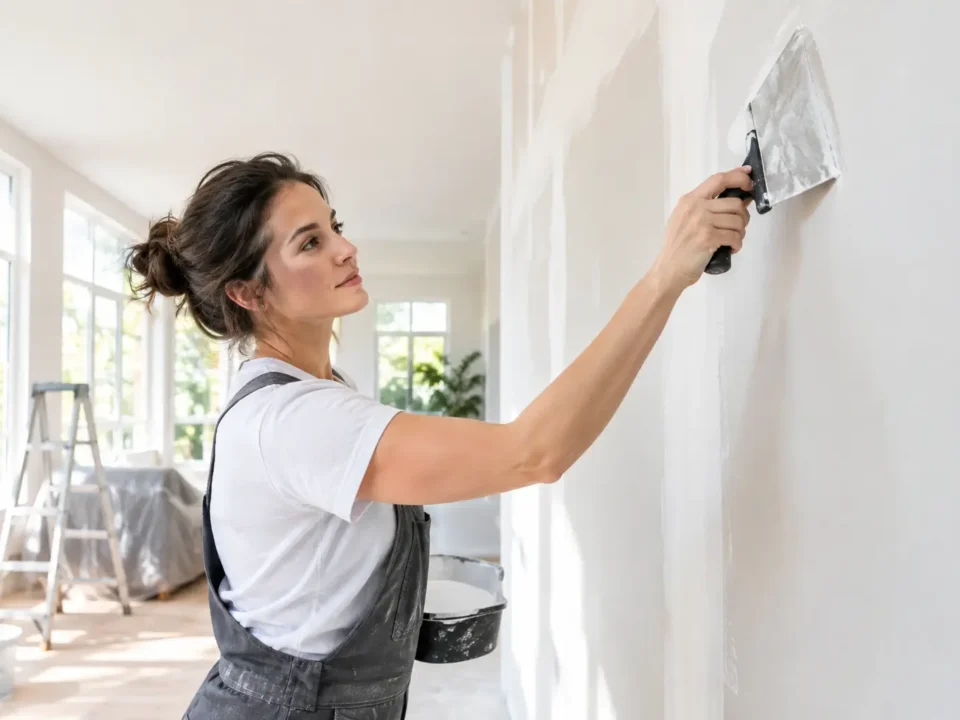
Smooth Ceiling Finishing Service That Lasts

Niagara Drywall Service for Basements
10 junio, 2026
How to Fix Drywall Corner Bead Right
12 junio, 2026
A ceiling tells on the whole room. If the surface is uneven, patched badly, or still covered in old popcorn texture, even great paint and lighting will not hide it. A professional smooth ceiling finishing service fixes that problem at the source, giving the room a clean, modern finish that looks intentional from every angle.
For homeowners, property managers, and contractors, the appeal is simple. A smooth ceiling looks newer, reflects light better, and makes the rest of the space feel sharper. But getting that result is not just about skimming on mud and sanding until it looks flat. Good ceiling finishing takes surface prep, the right compound buildup, careful sanding, and a final eye for consistency across the whole plane.
What a smooth ceiling finishing service actually includes
The job usually starts with the condition of the existing ceiling. In some homes, the surface is already drywall and just needs refinishing after cracks, stains, patches, or outdated texture removal. In other spaces, there may be heavier damage, poor previous taping, or transitions between repaired sections and older ceiling boards.
A proper smooth ceiling finishing service deals with all of that before the finish coat becomes the focus. Joints need to be taped correctly. Fastener spots have to be filled and built up without leaving rings or depressions. Repairs must be blended so they disappear into the field of the ceiling rather than stand out after paint goes on.
This is where many ceilings go wrong. A surface can look acceptable halfway through the job and still fail under primer, sunlight, or evening fixtures. Ceilings are unforgiving because the light often grazes across them, making ridges, lap marks, and low spots easy to spot.
Why smooth ceilings are harder than they look
Walls give you more forgiveness. Ceilings do not. You are working overhead, often across large open areas, and the visual standard is high because the finish is supposed to disappear.
A smooth ceiling has to read as one continuous surface. That means the transitions between seams, patches, corners, and old repairs need to vanish. It also means controlling sanding dust, avoiding over-sanding the face paper, and knowing when a surface needs another skim coat instead of more sanding.
The level of finish matters too. In many projects, a Level 4 finish may be acceptable, especially in standard residential rooms with regular paint and moderate lighting. In higher-end interiors or spaces with critical light, a Level 5 approach often gives a better final result because it adds a thin skim over the surface to reduce visual inconsistencies. It depends on the room, the lighting, and the expectations for the final paint appearance.
When this service makes the biggest difference
The clearest case is popcorn ceiling removal. Once texture comes down, the ceiling underneath often reveals old repairs, uneven joints, gouges, or leftover buildup. At that point, a smooth finish is not an extra. It is the step that makes the removal worth doing.
It also makes a major difference after water damage repairs. Even when the damaged drywall has been replaced, the finished area can stand out if the taping and skim work are rushed. The same goes for renovation projects where new drywall meets older surfaces. A smooth finish is what ties the room together visually.
Commercial spaces benefit as well. Offices, retail interiors, and renovated common areas often need a cleaner overhead finish because customers, tenants, and staff notice the overall polish of the space. A rough or patchy ceiling can make an otherwise solid renovation feel incomplete.
Smooth ceiling finishing service and paint results
Many people assume paint will hide minor ceiling flaws. In reality, paint usually does the opposite. Flat paint can soften some imperfections, but it will not erase poor finishing. Primer and paint reveal lines, pitting, drag marks, and inconsistent texture that were easy to miss on unfinished compound.
That is why paint-ready really matters. A ceiling should be uniform before the painter arrives, not dependent on extra coats to compensate for weak prep. When the finish work is done well, paint lays down evenly, the room looks brighter, and there are fewer surprises after the job is complete.
This matters even more in open-concept homes and renovated basements, where large ceiling areas are visible in one glance. If one section is smooth and another has shadow lines or patch edges, the eye catches it immediately.
What affects cost and scope
Not every ceiling requires the same amount of work. A small repair in a bedroom is very different from refinishing an entire main floor after texture removal. Cost usually depends on the size of the area, current ceiling condition, height, access, and the amount of prep involved.
If the ceiling has peeling texture, multiple previous patches, water staining, or cracked joints, the finishing process takes more labor. If furniture protection, dust control, or tight scheduling is part of the job, that can also affect scope. Vaulted ceilings and stairwell areas often take more time because setup and finishing overhead become more demanding.
This is one reason direct quoting matters. A contractor needs to see whether the ceiling needs spot repair, full skim coating, or a more advanced finish level. Giving every ceiling the same price or process usually leads to disappointment later.
The value of hiring a specialist
Ceiling finishing is detail work, and details show. An experienced drywall finisher knows how much buildup is needed over joints, how to feather repairs wide enough to disappear, and how to keep the finished surface consistent from one end of the room to the other.
That skill matters on both large and small jobs. A full-house ceiling refinish needs production discipline and quality control. A small patch after a leak needs precision so the repair does not flash through the paint. Both require technique, not guesswork.
A specialist also understands the practical side of the work. That includes protecting the home or occupied space, managing dust, keeping the project moving, and knowing when a ceiling needs more than a cosmetic skim. In busy renovation schedules, that reliability saves time for everyone involved.
For clients in places like Niagara, St. Catharines, and Hamilton, quick response can be just as important as finish quality, especially after damage or during an active remodel. TH Taping is built around that combination of precision and service, which is why both contractors and property owners call for planned work and urgent repairs.
How to know the finished ceiling is done right
The best test is simple. Look across the surface in natural light and under artificial light from different angles. The ceiling should appear even, with no visible tape lines, ridges, fastener pops, patch outlines, or rough transitions.
Corners should be clean. Repairs should blend into the surrounding area. The surface should feel consistent rather than wavy or heavily sanded in spots. Most of all, it should look calm. A well-finished ceiling does not demand attention. It lets the room feel finished.
If a contractor talks clearly about prep, finish level, repair blending, and paint readiness, that is usually a good sign. If the promise is just to make it look better with a quick skim, you may end up paying twice.
Is a smooth ceiling always the right choice?
Usually, yes, but there are cases where expectations should be adjusted. In older homes, framing movement, uneven substrate conditions, or years of layered repairs can limit how perfect a ceiling will become without more extensive reconstruction. In those cases, the right approach is to be honest about the condition, recommend the finish level that makes sense, and aim for the best durable result rather than oversell perfection.
That practical mindset matters. Good contractors do not just chase a nice photo. They build a ceiling that looks clean, holds up, and supports the rest of the room.
A smooth ceiling changes more than the overhead surface. It makes the entire interior feel cleaner, brighter, and better finished. If your ceiling is dated, damaged, or showing every patch and seam, the right finishing work can reset the room in a way paint alone never will.