Smooth Ceiling Finish: Is It Worth It?

Water Damaged Drywall Repair Done Right
19 mayo, 2026
Drywall Finishing Before Painting Done Right
21 mayo, 2026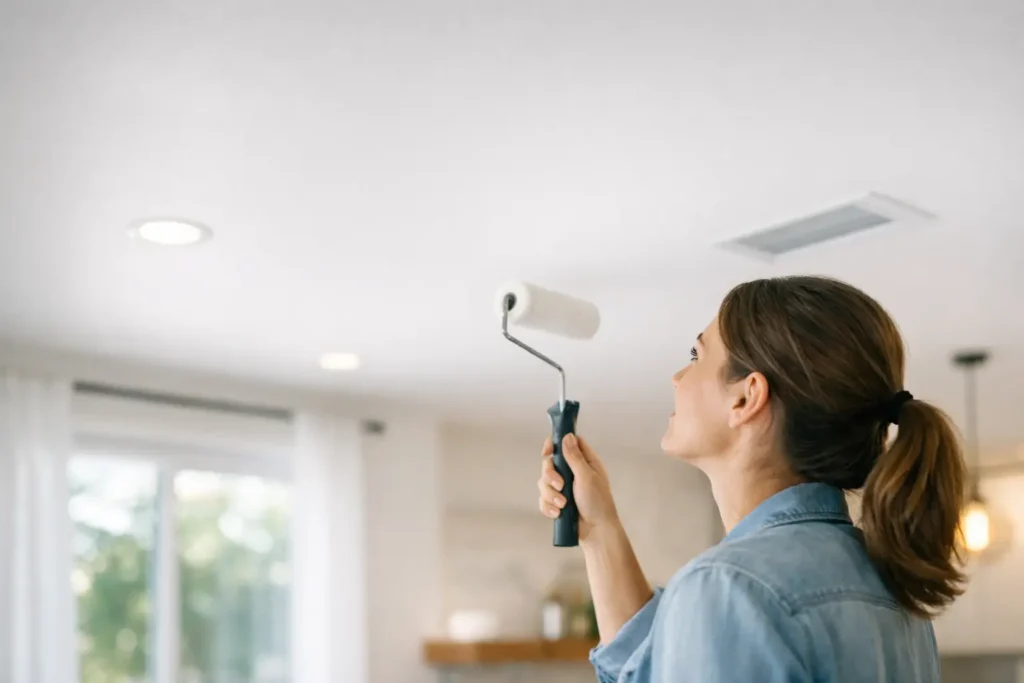
A ceiling tells on the whole room. You can have fresh paint, new floors, and sharp trim, but if the overhead surface is wavy, patched poorly, or still covered in dated texture, it pulls everything down. That is why a smooth ceiling finish makes such a noticeable difference. It gives the space a cleaner look, reflects light more evenly, and makes the entire room feel more finished.
For homeowners, property managers, and contractors, the appeal is simple. A smooth ceiling looks current, works with almost any interior style, and adds a level of visual polish that textured ceilings rarely match. But getting that result is not just a matter of sanding and painting. The quality of the substrate, the amount of prep, and the finishing standard all affect whether the ceiling ends up looking crisp or disappointing.
What a smooth ceiling finish really means
A true smooth ceiling finish is not just a ceiling without texture. It is a ceiling that has been properly prepared, taped, skimmed where needed, sanded with control, and finished so that seams, patches, joints, and surface variations do not stand out under normal light.
That last part matters. Ceilings are exposed to broad, even light during the day and harsh artificial lighting at night. Any ridge, joint line, or poorly feathered patch can show up fast. This is why ceiling work often requires more precision than people expect. A ceiling may look fine halfway through the process and still fail visually once primer and paint go on.
In many cases, the goal is close to a Level 5 finish, especially in rooms with large windows, open layouts, or flat paint colors that make imperfections easier to see. In other rooms, a strong Level 4 finish may be enough. The right choice depends on the condition of the ceiling, the lighting, and the expectations for the final appearance.
Why homeowners and contractors choose a smooth ceiling finish
The biggest reason is appearance. Smooth ceilings create a clean, modern look that works in renovated homes, new builds, offices, retail spaces, and rental updates. They also help a room feel less busy. If the walls, floors, cabinetry, and lighting already carry the design, texture overhead can start to feel unnecessary.
There is also a practical side. Popcorn and heavy textures can trap dust, age poorly, and make repairs more obvious. A smooth ceiling is easier to repaint and easier to patch properly when future work is needed. If you are updating a property for resale or preparing a commercial space for tenants, that cleaner finish can support the overall presentation.
For contractors and remodelers, smooth ceilings also fit better with current design expectations. Clients notice ceiling quality more than they used to, especially in open-concept spaces and renovated older homes. When the finish overhead is sharp, the whole project reads as more professional.
Where smooth ceilings work best
A smooth ceiling finish works especially well in living rooms, kitchens, hallways, offices, and basements that have been fully renovated. It is also a strong option when removing outdated popcorn texture or when repairing water damage and trying to bring the room back to a uniform appearance.
That said, not every ceiling starts from the same place. In an older home, joist movement, previous patchwork, sagging boards, or multiple paint layers can make a smooth result more labor-intensive. In these cases, the finish is still achievable, but it may require skim coating across the full surface instead of spot repairs alone.
Bathrooms and laundry rooms can also be good candidates, provided the right materials and paint systems are used. Moisture does not rule out a smooth finish, but poor ventilation and weak prep can shorten its life.
The part most people underestimate: surface prep
This is where ceiling projects are won or lost. If the drywall seams are not taped well, if old texture is not removed correctly, or if damaged areas are patched without blending into the surrounding field, the final paint will expose it.
Proper prep may include scraping existing texture, sealing stained areas, re-fastening loose drywall, retaping cracked joints, applying multiple coats of compound, and sanding with attention to flatness rather than speed. On ceilings with uneven porosity or old repairs, priming at the right stage is also important. It helps reveal flaws before finish paint goes on and prevents flashing across the surface.
A lot of frustration with ceiling work comes from skipping steps in order to save time. The problem is that ceilings are unforgiving. You cannot hide poor prep overhead and expect paint to fix it.
Smooth ceiling finish after popcorn removal
This is one of the most common requests, and it is also one of the most misunderstood. Removing popcorn is only the first phase. What is underneath may include damaged paper, exposed joints, uneven repairs, or a surface that was never meant to be seen smooth.
After popcorn removal, many ceilings need more than touch-up compound. They often need broad skim work to restore consistency across the entire plane. If the previous texture was hiding years of movement or rushed drywall finishing, those issues have to be corrected before the ceiling can look truly smooth.
This is why one popcorn ceiling may convert easily while another turns into a more involved refinishing job. The difference is not just the size of the room. It is the condition of the surface underneath.
Cost depends on condition, not just square footage
People naturally ask what a smooth ceiling finish costs per square foot, but that number only tells part of the story. Square footage matters, but ceiling height, room access, furniture protection, existing texture, repair needs, and lighting conditions all affect labor.
A clean new drywall ceiling in a vacant space is very different from an occupied home with popcorn removal, patching, and paint prep. The second job takes more containment, more detail work, and more finishing time. Commercial spaces can also vary depending on scheduling, height, and how visible the finished ceiling will be.
The most accurate way to price this kind of work is by evaluating the ceiling itself. A low quote that ignores prep usually becomes expensive later, either through change orders or through a final result that still shows flaws.
When patching is enough and when full skim coating makes more sense
Not every ceiling needs a full skim coat. If the issue is isolated damage from a leak, a clean cutout repair and proper blending may be enough. If the ceiling is generally sound and the surrounding finish is already smooth, targeted work can deliver an excellent result.
But if the ceiling has repeated patches, uneven texture, visible seam lines, or broad surface inconsistencies, spot repairs can leave a pieced-together look. In that case, full skim coating is often the smarter investment. It brings the entire surface into the same visual field instead of asking a few repaired areas to disappear into a flawed background.
This is where experience matters. The right recommendation is not always the biggest job. It is the one that gives the cleanest final appearance for the condition of the space.
Why workmanship shows more on ceilings than walls
Walls are interrupted by windows, doors, cabinets, art, and furniture. Ceilings are large uninterrupted planes. That makes every detail more visible. A slight hump at a joint, a ring from poor sanding, or a shallow patch that did not feather far enough can stand out once light spreads across the surface.
That is why ceiling finishing requires patience and control. It is not just about applying compound. It is about reading the surface, understanding how the room’s lighting will hit it, and finishing to the level the space demands. In premium rooms, that often means more passes, wider feathering, and a tighter standard before paint.
For clients in places like Niagara, St. Catharines, and Hamilton, where both renovations and property updates are common, this matters even more. Older homes often come with mixed ceiling conditions, and newer projects are usually expected to look crisp from every angle. TH Taping is here to help with both.
Is a smooth ceiling finish worth it?
If you want a ceiling that looks current, clean, and professionally finished, yes. A smooth ceiling finish gives the room a sharper appearance and removes the visual distraction that old texture, poor repairs, or uneven joints create. It also sets a higher standard for the rest of the space.
The only real caution is that the result depends heavily on prep and finishing quality. This is not a surface where shortcuts stay hidden. If the work is done right, the ceiling looks quiet and effortless. If it is rushed, the flaws stay overhead every day.
A good ceiling finish should not call attention to itself. It should make the whole room feel better the moment you look up. If your ceiling is outdated, damaged, or just holding the space back, fixing it can be one of the most effective upgrades you make.