Smooth Ceilings Versus Textured Ceilings

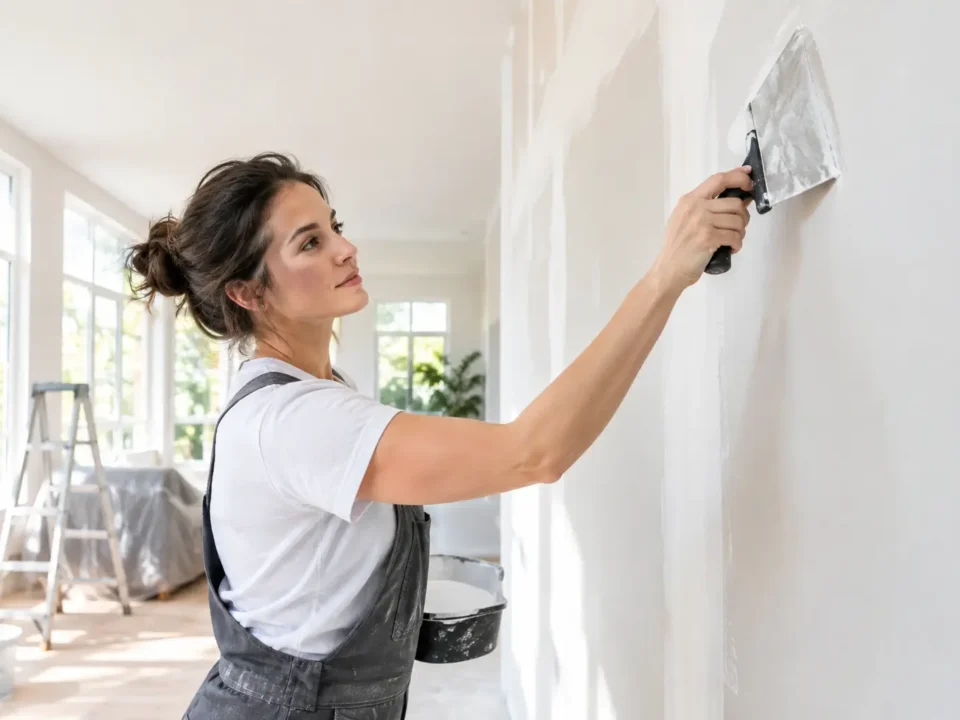
Best Surfaces for Level 5 Finish in Your Home
24 julio, 2026
How to Blend Drywall Patch Invisibly Before You Paint
28 julio, 2026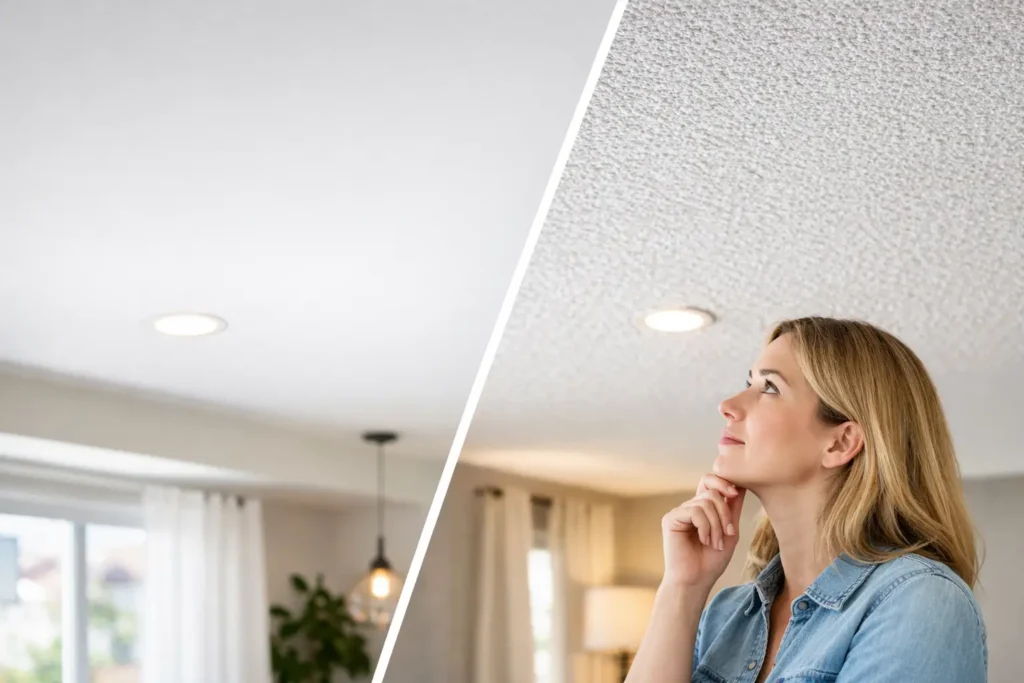
A ceiling can make a newly painted room feel finished or make it look dated before the furniture is even in place. When comparing smooth ceilings versus textured ceilings, the right choice comes down to more than personal taste. Light, room use, existing damage, maintenance expectations, and the quality of the drywall finish all affect the result.
For homeowners, property managers, and contractors, the goal is usually the same: a clean, durable ceiling that fits the space and does not create unnecessary repair issues later. Here is how the two options compare in real projects.
Smooth Ceilings Versus Textured Ceilings: The Visual Difference
A smooth ceiling has a flat, continuous surface with no deliberate pattern. It creates a crisp, modern appearance and lets lighting, paint color, trim, and architectural details stand out. In renovated homes, condos, offices, and newer construction, a smooth ceiling often gives the room a more refined finish.
Textured ceilings use a visible pattern or material to create depth. Common examples include stipple, knockdown, orange peel, and older popcorn finishes. Texture can add character in certain designs, but it can also make a room feel visually heavier, especially when the pattern is dated or uneven.
The difference is most noticeable in open-concept rooms and spaces with good natural light. A smooth ceiling reflects light evenly and keeps the visual focus on the room itself. Texture creates shadows, which can make ceilings feel lower or draw attention upward. That is not always a problem, but it should be a deliberate design choice.
Smooth ceilings are often the stronger option when the rest of the home has clean lines, modern fixtures, large windows, or simple trim. Textured finishes may fit better in a space where the existing style is more traditional or where a subtle pattern is part of the intended look.
Finish Quality Matters More on a Smooth Ceiling
The main trade-off with a smooth ceiling is that it shows imperfections. Drywall seams, fastener marks, uneven joints, poor sanding, and patches can become visible when light hits the surface at an angle. This is especially common near windows, pot lights, pendant lights, and long hallways.
That is why smooth ceilings require careful taping and finishing. A Level 4 finish may work well in many standard rooms with flat paint and normal lighting. For ceilings with strong natural light, glossy paint, or critical sightlines, a Level 5 finish can provide the extra uniformity needed for a premium result.
Texture can hide minor flaws better than a smooth surface. In older homes, that can be one reason a textured ceiling was used in the first place. It may disguise slight waviness in drywall, previous repairs, or areas where framing is not perfectly even.
Still, texture is not a shortcut for poor preparation. A bad seam can telegraph through a textured finish, and an inconsistent texture can look worse than a properly finished smooth ceiling. The best result starts with solid drywall work, then uses the finish that suits the space.
Lighting Can Change the Decision
Before choosing a ceiling finish, look at how the room is lit. Raking light, which runs across the surface rather than directly down on it, exposes every irregularity. Large windows, skylights, track lighting, and wall-wash fixtures can all create this effect.
In a room with challenging lighting, a professionally prepared smooth ceiling is still possible, but the finishing standard needs to match the conditions. Skipping that step to save time can lead to visible flaws after painting, when repairs become more disruptive and expensive.
Repairs and Maintenance Over Time
Both ceiling types can be repaired, but neither is equally simple in every situation. Smooth ceilings are usually easier to patch cleanly because the repaired area can be taped, finished, sanded, primed, and painted to blend with the surrounding surface. The challenge is making sure the repair is completely flat and invisible under the room’s lighting.
Textured ceilings are harder to match. Even when the original texture is known, application technique, material consistency, age, paint buildup, and surrounding wear can change the appearance. A small repair may be manageable, but larger patches often require blending across a wider area or retexturing the full ceiling for a consistent look.
Maintenance is another practical factor. Smooth ceilings are easier to dust, wipe, repaint, and inspect for stains or cracks. Textured surfaces collect more dust and cobwebs in their ridges and can be more difficult to clean without damaging the finish.
For rental properties and commercial spaces, smooth ceilings can make ongoing maintenance more straightforward. When a leak, access opening, or minor damage needs attention, the surface can be restored without the added challenge of recreating a pattern.
Popcorn Ceiling Removal Is Often a Good Upgrade
Popcorn ceilings remain common in older properties, but many owners choose to remove them during renovations. The finish can hold dust, darken over time, and make rooms feel older than they are. It is also difficult to repair neatly after water damage or electrical work.
Removal is not simply a matter of scraping. The ceiling needs to be assessed first, particularly in older buildings where testing may be appropriate before disturbing the existing material. Once the texture is removed, the drywall underneath often needs repairs, skim coating, proper sanding, and priming before it is ready for paint.
The final result can change the entire room. A clean smooth ceiling makes a kitchen renovation, basement finish, living room update, or office refresh feel more intentional. It also creates a better backdrop for modern recessed lighting and fresh wall colors.
Cost: Look Beyond the First Quote
Textured ceilings can sometimes cost less initially because the texture helps conceal minor surface variations. Smooth ceilings usually require more preparation, detail work, and quality control. The price difference depends on ceiling condition, square footage, access, lighting, existing texture, and whether repairs are needed.
However, the lowest upfront price is not always the lowest long-term cost. If a textured ceiling needs repeated patching, cleaning, or eventual removal, the savings can disappear. A professionally finished smooth ceiling may cost more at the start, but it offers a timeless appearance and simpler repair options later.
For a small patch, the best solution may be to preserve the existing texture and blend the repair as closely as possible. For a full renovation, or when multiple rooms have dated popcorn or stipple finishes, converting to smooth ceilings may deliver a stronger overall improvement.
Which Ceiling Finish Fits Your Space?
Choose a smooth ceiling when you want a modern look, easier cleaning, a clean repainting surface, and a finish that works well with updated interiors. It is particularly effective in living rooms, kitchens, bedrooms, hallways, offices, and commercial spaces where presentation matters.
Choose texture when it genuinely complements the existing design or when a subtle finish is needed to work with an older surface. Just keep future maintenance in mind. A textured ceiling can hide some imperfections, but it is usually less forgiving when repairs are needed years later.
For homeowners and contractors in Niagara Region, St. Catharines, and Hamilton, the most reliable approach is to evaluate the ceiling before selecting a finish. Look for cracks, water staining, sagging drywall, old repairs, uneven seams, and the direction of natural light. Those details determine whether a repair, a new texture, a skim coat, or a Level 5 smooth finish will provide the best result.
A ceiling should not be the feature that distracts from the room. Whether you keep texture or move to a smooth finish, careful drywall preparation is what makes the final surface look clean, durable, and ready for paint.