Small Drywall Repair Services That Last

Drywall Patch Repair Done Right
15 mayo, 2026
Emergency Drywall Repair Done Right
17 mayo, 2026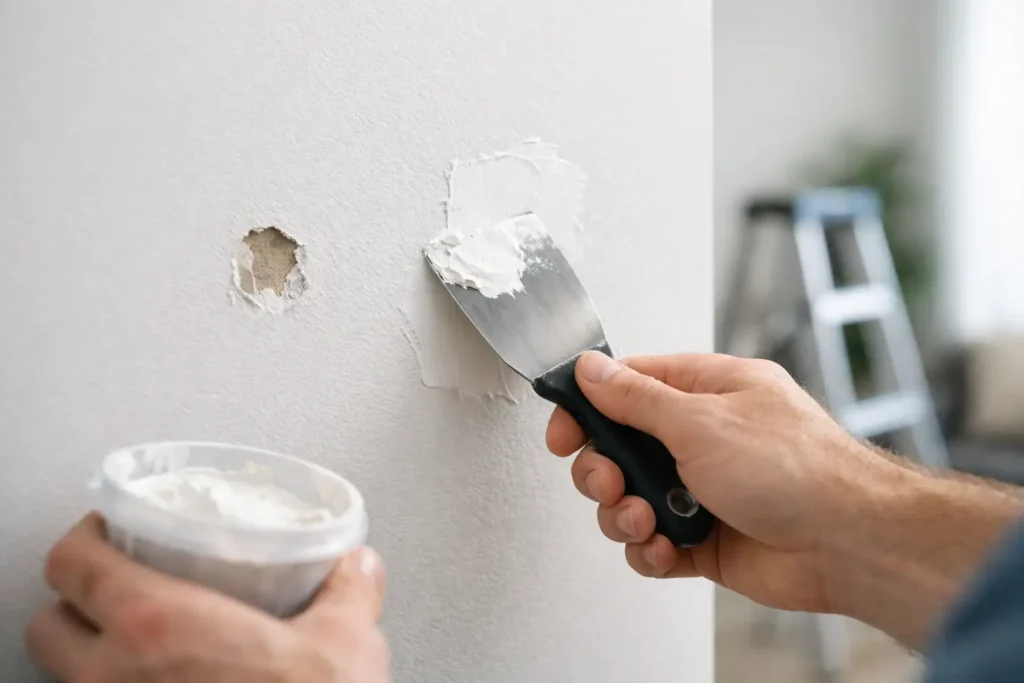
A doorknob hole in the hallway rarely stays just a doorknob hole. Once the light hits it, the whole wall looks tired. The same goes for stress cracks above a doorway, a bad patch after plumbing work, or ceiling damage that keeps catching your eye. That is where small drywall repair services make a real difference – not as a temporary cover-up, but as a clean fix that brings the surface back to normal.
For homeowners, property managers, contractors, and commercial clients, small repairs usually feel simple until the finish is wrong. The patch may be flat but still visible. The texture may be off. The joint may flash through paint. What looked like a quick fix turns into another round of sanding, more paint, and more frustration. Good drywall repair is not just about filling a hole. It is about making the repair disappear.
What small drywall repair services actually include
Small drywall repair services are designed for damage that affects a limited area but still needs professional finishing. That can mean nail pops, corner bead damage, settlement cracks, dents from moving furniture, water-damaged sections after a leak, or cutouts left behind by electrical and plumbing work.
In many cases, the damaged section needs more than compound. A clean repair may involve cutting out weak material, securing the board properly, installing a new patch, taping the joints, applying multiple coats of compound, sanding for a smooth surface, and matching the surrounding finish so the repair does not stand out after paint.
This is where experience matters. A small patch in a high-visibility wall often takes more finesse than a larger area in an unfinished basement. The smaller the repair, the less room there is to hide mistakes.
Why small drywall repairs are easy to underestimate
A lot of people assume small damage should be cheap, fast, and simple every time. Sometimes it is. Sometimes it is not. The size of the hole is only one part of the job.
Location matters. A patch at eye level in a bright living room has to be blended carefully. Ceiling repairs are also more demanding because any unevenness shows quickly. If the surrounding wall has old texture, heavy paint buildup, or previous poor repairs, the work takes more precision.
The cause of the damage matters too. A crack from minor settling is one thing. A crack that keeps returning may point to movement, framing issues, or moisture. Water damage around a ceiling patch can also mean the drywall is only part of the problem. A reliable contractor should be honest about that instead of simply covering it and walking away.
The difference between a patch and a finished repair
Anyone can fill a hole. Not everyone can leave a wall ready for paint with no obvious repair lines. That difference is what clients are really paying for.
A proper repair starts with solid preparation. Loose drywall has to be removed. Weak edges need to be cleaned up. Backing may be required so the patch is secure. From there, taping and compound work have to be done in stages. Rushing this part usually leads to shrinking, cracking, or visible seams.
Finishing is where the quality shows. A good repair is feathered wide enough to blend into the wall, sanded smooth without scarring the paper face, and left visually clean under normal lighting. On premium interiors, the standard may need to be even higher, especially before repainting large open walls or smooth ceilings.
When professional small drywall repair services are worth it
If the damaged area is in a garage or storage room, a basic DIY patch may be acceptable. But in finished spaces, the margin for error is small. Living rooms, entryways, offices, stairwells, and ceilings tend to expose every shortcut.
Professional service becomes especially valuable when the repair is in a visible area, when multiple small issues need to be handled in one visit, or when the wall needs to be ready for painting on a schedule. It also makes sense after trades have opened walls for plumbing, electrical, or HVAC work. Those cutouts often need to be closed and finished cleanly so the project can move forward without delay.
For rental properties and commercial spaces, speed matters just as much as appearance. A quick, clean repair helps turn over units faster, reduces complaints, and keeps interiors presentable without dragging the work out.
What to expect from a quality drywall repair process
The best repair process is straightforward. First comes an assessment of the damage, not just the visible surface but the condition around it. Then the repair area is prepared, stabilized, and patched as needed. Taping and compound are applied in stages to build a smooth, durable finish.
After that, the surface is sanded and checked under light. This part is critical because small ridges and shallow depressions often appear only when the wall is viewed from an angle. A careful finisher catches those details before the painter does.
Not every repair includes painting, but the drywall should be left in a condition that is ready for primer and paint. For clients who care about a polished final result, that readiness matters. A repair is only truly done when the wall or ceiling looks right after finishing work is complete.
Small drywall repair services for homes, rentals, and job sites
Different clients need different things from the same service. A homeowner may want one ugly wall patch fixed before listing a property or finishing a remodel. A property manager may need several unit repairs handled efficiently between tenants. A general contractor may need dependable patching after mechanical rough-ins, with a finish level that fits the rest of the project.
That is why flexibility matters. Some drywall companies focus only on large installations and skip the small jobs. The problem is that small jobs still affect the final look of a property. A single bad patch can stand out more than an entire newly finished room.
For that reason, small repair work should be treated with the same care as full drywall finishing. Whether the job is one ceiling stain repair or several wall patches across a commercial space, the standard should stay the same – clean lines, proper adhesion, smooth finishing, and a surface that is ready for the next step.
How to tell if a drywall repair contractor is the right fit
The first sign is simple communication. You should get clear answers about what the repair involves, what finish you can expect, and whether the damage may point to a larger issue. Vague promises usually lead to disappointing results.
The second sign is attention to finish quality. Contractors who specialize in taping and finishing understand that drywall is not done when the hole is closed. It is done when the surface looks consistent. That is especially important for smooth walls, modern ceilings, and higher-end interiors.
The third sign is willingness to take on small work seriously. A company that values craftsmanship does not treat minor repairs like throwaway jobs. That matters for clients across Niagara Region, St. Catharines, and Hamilton, where homeowners and property professionals often need fast, professional help on targeted repairs instead of full-scale drywall replacement.
TH Taping is one of the teams that understands that balance – handling both detailed repair work and larger finishing projects with the same focus on clean results.
Why the finish matters more than the size of the job
A small drywall repair is rarely judged by how much material was used. It is judged by what you can still see after the job is done. If the patch flashes through paint, if the ceiling line looks uneven, or if the crack comes back, the repair did not solve much.
That is why craftsmanship matters. The goal is not to make damage less noticeable. The goal is to restore the surface so it looks right again and holds up over time. Sometimes that takes a quick patch. Sometimes it takes more buildup, better blending, or a higher finish standard. It depends on the wall, the light, and the expectation for the space.
If you have a small drywall issue that keeps pulling attention for the wrong reason, fixing it properly is usually simpler than living with it. A clean repair can change the feel of a room fast, and the best ones are the repairs no one notices at all.
When a wall or ceiling needs to look finished, even a small repair deserves professional attention.