Drywall Patch vs Full Replacement

How Long Does Drywall Finishing Take?
24 junio, 2026
Ceiling Water Damage Repair Done Right
28 junio, 2026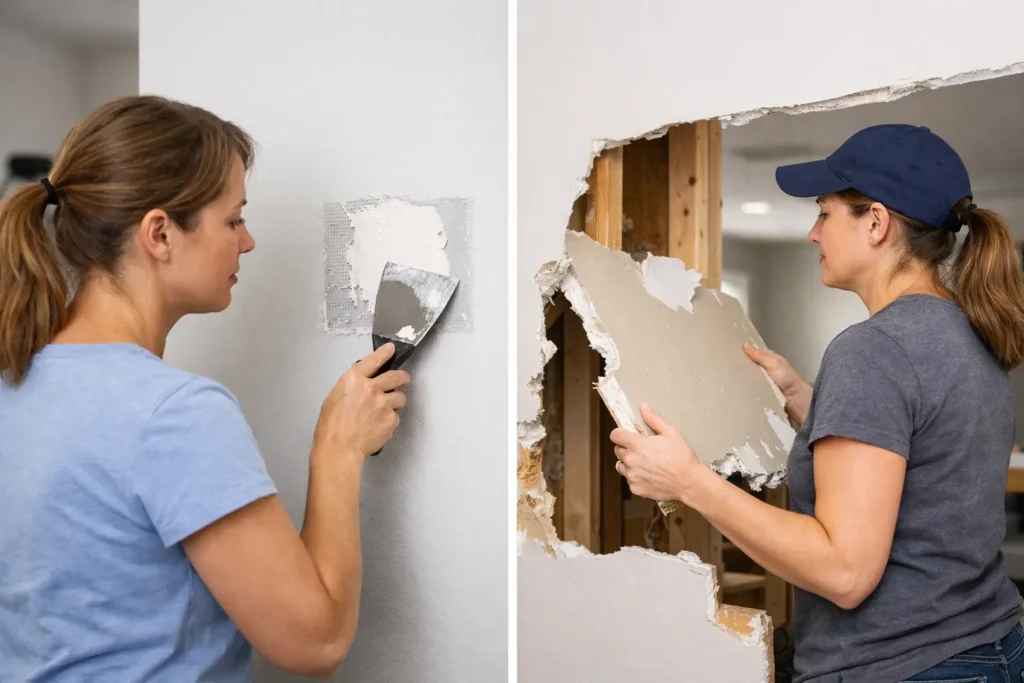
A wall can look like it needs a small fix and still turn into a bigger repair once the surface is opened up. That is why the drywall patch vs full replacement decision matters so much. The right choice affects cost, finish quality, paint results, and how long the repair actually holds up.
For homeowners, property managers, and contractors, the real question is not just what is cheaper today. It is what will leave the wall or ceiling flat, clean, and ready for paint without repeat problems a few months later. Some damage is truly local. Other damage spreads beyond the visible spot, especially after leaks, settling, impact, or past repair work that was never finished properly.
Drywall patch vs full replacement: what is the difference?
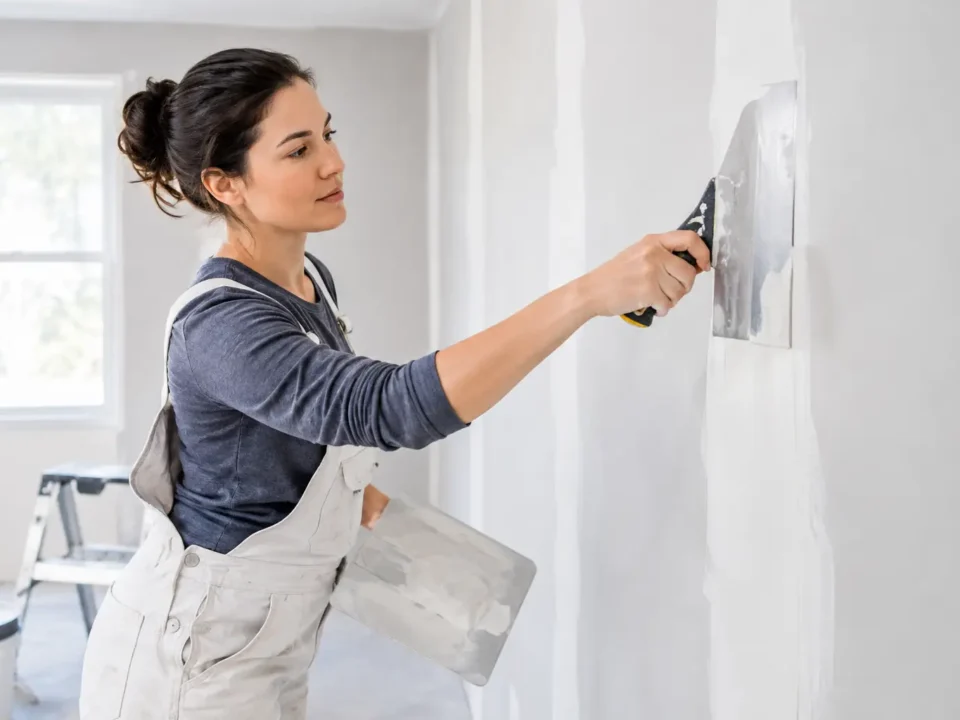
A drywall patch is a targeted repair. The damaged area is cut out or stabilized, new material is fitted into that section, joints are taped, compound is applied, and the area is sanded and blended into the surrounding surface. When done well, a patch restores the wall without removing more drywall than necessary.
Full replacement means removing an entire sheet, a large section, or sometimes all drywall on a wall or ceiling plane. This is usually the better route when damage is widespread, when the structure behind the drywall needs access, or when the existing surface has too many weak spots to blend cleanly.
The key difference is not just size. It is whether the surrounding drywall is still sound enough to support a lasting repair and whether the finished surface can look consistent under paint and lighting.
When a drywall patch makes sense
A patch is usually the right move when the damage is contained and the rest of the surface is in good shape. Small holes from door handles, medium holes from accidental impact, minor water stains after the source has been fixed, and localized cracks can often be repaired without replacing a whole wall.
Patching also works well when the drywall paper is intact around the damaged area and the framing behind it is solid. If there is no active moisture, no mold concern, and no soft or crumbling gypsum beyond the visible break, a professional patch can save time and avoid unnecessary demolition.
This option is often ideal for cosmetic damage in finished spaces where the goal is to restore the area with as little disruption as possible. In many homes and commercial interiors, that is the most practical answer.
Still, the quality of the patch depends on the finish. A patched wall that is not feathered properly can flash through paint, especially with flat light across hallways, living rooms, and ceilings. That is why the repair process matters just as much as the size of the hole.
Good candidates for patching
Localized damage is the clearest sign. One damaged section on an otherwise smooth wall is usually worth repairing. Small ceiling repairs can also be patched if the surrounding board has not sagged and there is no larger moisture issue above.
Patching is also a smart choice when matching the existing texture or smooth finish is realistic. If the surrounding area was finished well to begin with, a skilled taper can often blend the repair so it disappears after primer and paint.
When full replacement is the better call
Full replacement starts to make more sense when damage is widespread, repeated, or structural. If water has traveled across a ceiling, if multiple sections are swollen or soft, or if the drywall has mold contamination, replacing larger sections is usually the safer and cleaner approach.
The same applies when there are many failed patches, loose tape joints, bubbling compound, or uneven surfaces across a broad area. At a certain point, continuing to patch becomes more expensive than starting fresh. You may save on demolition in the short term, but lose that savings trying to level, skim, and hide years of bad repairs.
Ceilings often push the decision toward replacement faster than walls do. Even minor waviness or patch outlines can be obvious overhead, especially under natural light or recessed lighting. If a ceiling has multiple stains, cracks, or old texture issues, replacement can create a much more consistent final look.
Signs patching may not be enough
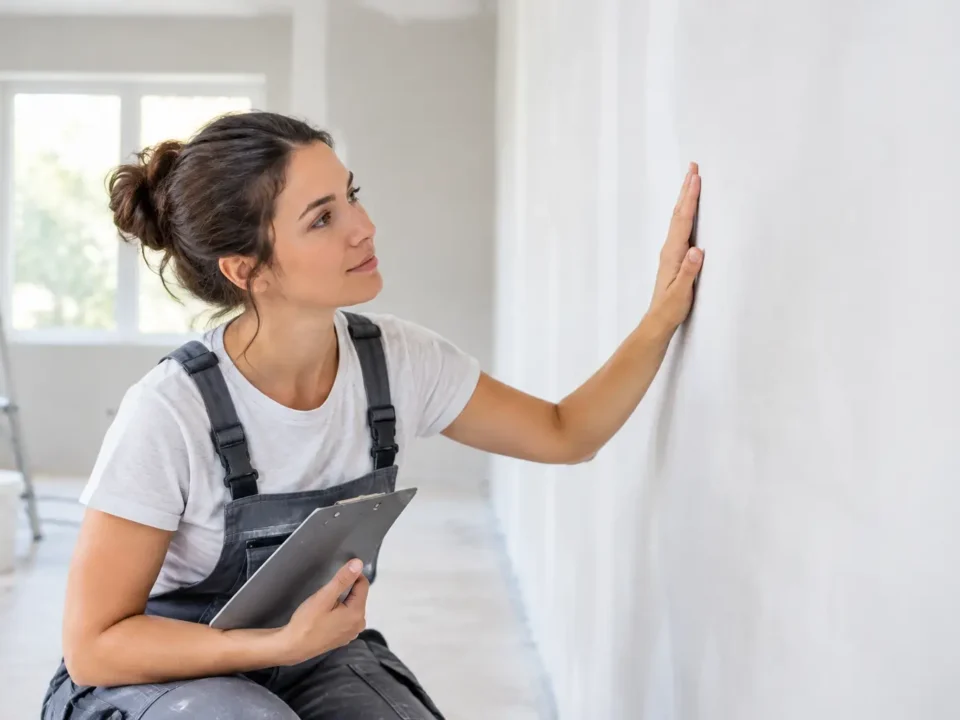
If the drywall feels soft when pressed, has a musty smell, shows staining beyond the visible damage, or has cracks that keep returning, the issue may be deeper than the surface. Damage around windows, plumbing lines, or exterior walls also deserves a closer look because hidden moisture can spread farther than expected.
Another red flag is poor substrate condition. If the board is loose on the framing, edges are broken down, or the surrounding paper is torn and fuzzy, the repair area may not hold a clean patch for long. In those cases, replacement gives the new finish a stronger base.
Cost is important, but finish quality matters too
Many people approach drywall patch vs full replacement as a simple price comparison. That is understandable, but drywall is one of those trades where visible quality matters. The wall may be technically repaired, yet still look uneven after paint if the transition is not handled correctly.
A patch is often less expensive upfront because less material is removed and replaced. It usually creates less mess and can be completed faster. But if the patch has to be extended, skim coated wider, or revisited because surrounding damage was missed, that lower starting cost can disappear.
Full replacement usually costs more because labor and materials increase with the size of the area. Even so, it can be the more efficient choice when the old surface is too compromised to finish well. A fresh board, clean joints, and proper taping often produce a better result with fewer compromises.
For property managers and remodelers, this is where experience matters. A repair should not only pass a quick visual check. It should hold up over time and look right under final paint.
The hidden factor: paint and light
A drywall repair is judged twice. First before paint, then after paint. Many patch jobs look acceptable when they are still dull and unfinished. Once primer, topcoat, and lighting hit the surface, every ridge and low spot becomes easier to see.
That is why a repair decision should include the expected finish level. In a utility room, a basic repair may be enough. In a main living area, office, lobby, or high-end renovation, a cleaner finish standard matters much more. Level 4 or even Level 5 style finishing may be needed to keep patched areas from showing through.
This is especially true on smooth ceilings. If the goal is a crisp, modern surface, replacing a larger section can sometimes deliver a cleaner result than trying to hide multiple patch transitions.
How professionals decide on patch or replacement
A good contractor does not make the call based on hole size alone. They look at the cause of damage, the condition of the surrounding board, what is behind the wall or ceiling, and how visible the repaired area will be when the job is done.
They also consider whether the repair needs to match an existing smooth finish, whether the area has prior patch history, and whether paint will exaggerate imperfections. In some cases, the best answer is a hybrid approach – replace the damaged section, then skim a broader area so the finish reads as one continuous plane.
That kind of decision protects the final appearance, not just the repair ticket.
What to expect from the repair process
Whether the job is a patch or full replacement, the process should start with identifying and resolving the cause. If there was a leak, movement, or impact issue, that needs attention first. Covering damage without solving the source only leads to another repair.
From there, the damaged material is removed or stabilized, new board is fitted if needed, joints are taped, compound is applied in stages, and the area is sanded and prepared for primer and paint. The difference is simply scale. A proper finish still takes time because each coat needs to be built and blended carefully.
That is where detail work separates a quick fix from a repair that actually disappears. At TH Taping, that focus on clean, durable finishes is what turns a drywall repair into a result that looks right once the room is back in use.
Choosing the right option for your space
If the damage is isolated, dry, and surrounded by solid drywall, a patch is often the practical choice. If the damage is spread out, soft, stained, uneven, or tied to a bigger issue, replacement is usually the better investment.
The best decision is the one that leaves you with a stable surface and a finish that does not call attention to the repair. A wall or ceiling should look complete, not recently rescued. If you are unsure which category your project falls into, a professional assessment can save you from paying twice for the same area.