
7 Best Ceiling Options After Popcorn Removal

When to Call an Emergency Drywall Repair Service
16 junio, 2026
Level 4 vs Level 5 Finish Explained
20 junio, 2026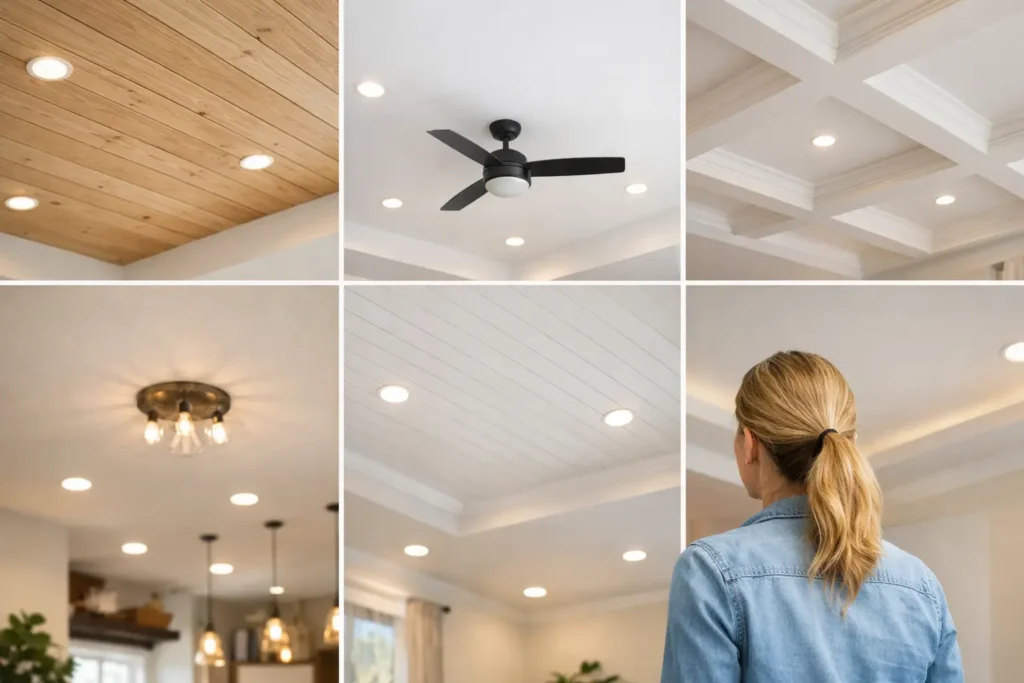
That old popcorn ceiling is finally gone, and now the real decision starts. Choosing the best ceiling options after popcorn removal is not just about looks. It affects how light moves through the room, how much prep work is needed, how flaws show, and how long the finish will hold up.
For some homes, a clean smooth ceiling is the obvious next step. In others, a light texture or a plank finish makes more sense because it hides minor imperfections and fits the style of the space better. The right answer depends on the condition of the ceiling underneath, the level of finish you want, and how much maintenance you are willing to take on later.
Best ceiling options after popcorn removal: what works best
Once popcorn texture comes down, the ceiling usually needs more than a quick coat of paint. Scraping can expose taped joints, uneven patches, old repairs, and surface damage that was hidden for years. That is why the best ceiling options after popcorn removal should always be judged by both appearance and substrate condition.
A perfectly smooth ceiling looks sharp and modern, but it also shows every flaw if the finishing work is not done properly. A light texture can be a smart choice when the goal is a clean update without chasing every minor imperfection. Decorative systems like planks or panels can completely change the look of a room, but they bring a different budget and installation process.
Smooth ceiling finish
A smooth ceiling is still the top choice for many homeowners because it gives the room a brighter, cleaner, more updated appearance. It works especially well in open-concept spaces, renovated basements, kitchens, and living rooms where a modern finish matters.
The catch is quality. Smooth ceilings are unforgiving. If the surface is uneven, if the joints were not properly taped, or if the skim coat was rushed, the final paint will highlight everything. That is why this option usually requires careful drywall repair, full skim coating where needed, sanding, and proper priming before paint.
If you want the highest-end result, this is often the best investment. It is also the finish that benefits most from level 4 or level 5 drywall finishing, especially in rooms with lots of natural light.
When smooth is the right choice
Smooth ceilings make the most sense when the home already has a more updated style or when you are renovating multiple rooms and want everything to feel consistent. They are also ideal if you plan to upgrade lighting, because recessed lights and modern fixtures tend to look better against a flat, clean surface.
If the ceiling has significant damage or poor past repairs, smooth can still work, but the prep needs to be done right. This is where professional taping and finishing really matter.
Light knockdown texture
A light knockdown texture is a practical option for homeowners who want a finished look without the strict perfection that smooth ceilings demand. It has subtle movement, hides small surface irregularities better than a flat finish, and still feels much more current than old popcorn texture.
This is often a good middle ground. You get a ceiling that looks intentional and clean, but you are not paying for the same level of surface correction that a premium smooth finish may require. In family homes, rentals, and larger ceilings where a few minor imperfections are likely, knockdown can be a very sensible choice.
The key word here is light. Heavy texture can make a room feel dated again. A soft, controlled application gives better results and keeps the ceiling from becoming the focal point for the wrong reasons.
Orange peel or subtle sprayed texture
Orange peel is another option that can work well after popcorn removal, though it tends to be more common on walls than ceilings. On ceilings, it gives a fine, understated texture that helps conceal minor flaws while keeping the overall look simple.
Compared with knockdown, orange peel has less visual depth. That can be a plus if you want just enough texture to soften imperfections without creating a noticeable pattern overhead. It is usually easier to blend visually than older textured finishes, but repairs still need a skilled hand to avoid patchy areas.
For utility spaces, hallways, and secondary rooms, this can be an efficient choice. For main living areas, many owners prefer either fully smooth or a softer knockdown because those finishes tend to look more custom.
Skim coat with premium paint finish
This option deserves its own category because it is more than just a smooth ceiling. A skim coat creates a refined, uniform surface across the entire ceiling, helping to eliminate shallow imperfections, old texture residue, and slight transitions between patches.
If you removed popcorn and want the room to feel truly finished, this is often the strongest path. A skim-coated ceiling paired with the right primer and ceiling paint gives a crisp result that photographs well, reflects light evenly, and raises the overall standard of the room.
It is not the cheapest route, but it often delivers the best long-term visual value. In homes being prepared for resale, higher-end renovations, or commercial interiors where presentation matters, skim coating stands out for a reason.
Ceiling planks or wood-look boards
Not every ceiling needs to go back to drywall. If the room has a certain design style, ceiling planks or wood-look boards can be one of the best ceiling options after popcorn removal. They add warmth, help cover uneven substrate conditions, and create a finished architectural look.
This works particularly well in basements, cottages, accent rooms, or spaces where you want a more custom feel. It can also be useful when the ceiling underneath would require extensive correction to become perfectly smooth.
The trade-off is that planks create a stronger design statement. That is great when it suits the room, but not every home benefits from it. You also need to think about ceiling height, lighting layout, and access to anything above the ceiling if future work is needed.
Tongue-and-groove or decorative panel systems
Decorative panel systems offer another alternative when drywall refinishing is not the only goal. Tongue-and-groove ceilings, coffered-style panels, or other surface-mounted systems can turn a plain room into something much more distinctive.
These options are usually less about hiding a bad ceiling and more about creating character. They can be a strong fit in entryways, dining rooms, home offices, and commercial spaces where visual impact matters. They also help disguise inconsistencies that would be obvious under a smooth painted finish.
Still, these systems are more style-driven than neutral. If your priority is broad appeal and a clean, modern update, smooth drywall usually wins. If your priority is personality, panels may be worth considering.
Painted exposed ceiling
In some basements, loft-style spaces, and commercial interiors, an exposed painted ceiling can work surprisingly well. Instead of rebuilding the surface below the old texture, the existing ceiling material is removed or opened up and the exposed structure above is painted in a single color, often black, white, or gray.
This is not the right fit for every property, but in the right setting it can save headroom and create a very intentional look. It is most common in spaces with an industrial or casual modern design. It also requires planning around mechanicals, wiring, and insulation, so it is not simply a shortcut.
For standard living spaces, this usually is not the first recommendation. For renovated basements or commercial units, it can be a smart design move.
How to choose the right ceiling finish
The best choice comes down to three things: condition, style, and budget. If the substrate is in good shape and you want a premium look, a smooth or skim-coated ceiling is hard to beat. If the surface has minor flaws and you want a practical upgrade, a light knockdown or subtle texture may be the better fit.
You should also think about lighting. Large windows and ceiling-mounted fixtures will reveal more surface detail than you might expect. A finish that looks fine in low light can show every seam in daylight. That is why ceilings need to be evaluated in real jobsite conditions, not just chosen from photos.
For owners managing rentals or multi-room renovations, consistency matters too. A beautiful ceiling in one room can make the next room look unfinished if the transition is abrupt. In many projects, the smartest move is choosing a finish that balances appearance with realistic maintenance.
A lot of clients want the same thing after popcorn removal: a ceiling that looks clean, lasts, and does not call attention to past damage. That is exactly where skilled taping, patching, and finishing make the difference. TH Taping is here to help homeowners, contractors, and property managers get that result with work that is precise, durable, and ready for paint.
If you are deciding what comes next after popcorn removal, do not just pick the nicest-looking finish on paper. Pick the one that fits the condition of the ceiling and the standard you want every time you look up.