Ceiling Refinishing for a Smooth, Modern Finish

Wall Finishes That Make Every Room Look Better
16 septiembre, 2026
Wall and Ceiling Refinishing Benefits for Your Home
20 septiembre, 2026
A ceiling can make a freshly painted room look unfinished when it has popcorn texture, patchy repairs, water stains, or visible drywall seams. Professional ceiling refinishing corrects those problems at the surface level and creates the clean, consistent finish a room needs to look complete.
For homeowners, property managers, contractors, and remodelers, the goal is not simply to cover an old ceiling. It is to address the reason it looks uneven, repair it properly, and leave a finish that holds up under paint and everyday lighting. The right process depends on the ceiling’s condition, the existing texture, and the level of visual quality the project requires.
What Ceiling Refinishing Actually Includes
Ceiling refinishing is the process of restoring or upgrading a ceiling’s visible surface. It may involve removing outdated texture, repairing cracks or water-damaged drywall, re-taping seams, applying joint compound, sanding, priming, and preparing the ceiling for paint. In some cases, refinishing also means matching an existing texture after a repair rather than converting the entire ceiling to smooth.
A smooth ceiling is often the preferred choice in renovated homes, updated rentals, offices, and commercial interiors because it creates a cleaner, more modern appearance. But smooth finishes are also less forgiving. Light from windows, recessed fixtures, and chandeliers can reveal ridges, seams, sanding marks, and uneven patches that might go unnoticed on a textured ceiling.
That is why the preparation matters as much as the final coat of paint. A ceiling can look acceptable during the work, then show every flaw after light hits it from a new angle.
Signs Your Ceiling Needs Refinishing
Some ceiling issues are purely cosmetic, while others point to a repair that should happen before the damage spreads. Popcorn texture that looks dated, flaking paint, old patchwork, visible tape lines, and hairline cracks are common reasons to refinish.
Water stains deserve closer attention. A stain may be left behind by an old leak that has already been fixed, but it can also signal an active plumbing, roof, or condensation issue. Refinishing before the moisture source is resolved usually means the stain or damage will return. The source should be corrected first, then the area should be fully dry before repair materials are applied.
Sagging drywall, soft spots, recurring cracks, or loose texture need more than a cosmetic skim coat. These conditions may require damaged material to be removed, replaced, fastened correctly, and re-finished. A proper assessment prevents a temporary patch from becoming a repeat repair.
Popcorn Ceiling Removal and Smooth Finishes
Popcorn ceilings were widely used because texture could hide minor imperfections and speed up installation. Today, many owners choose to remove them for a brighter, cleaner, more current look. The work is more involved than scraping texture off the surface.
First, the texture needs to be evaluated. Older materials may require testing before disturbance, particularly in buildings constructed before modern material standards. Once the area is confirmed safe to work on, floors, walls, furniture, vents, and fixtures need careful protection. Ceiling texture creates fine debris, and containment is part of doing the job cleanly.
After removal, the underlying ceiling often reveals nail pops, tape joints, old repairs, or uneven drywall. This is where a professional finish makes the difference. The surface may need re-taping, spot repairs, multiple coats of compound, and controlled sanding before it is ready for primer.
A smooth finish is not always the only answer. If a property has a well-maintained textured ceiling and only a small repair is needed, matching the existing texture can be the more practical choice. It can save time and avoid refinishing an entire room. When the ceiling is heavily patched, outdated, or part of a larger renovation, full smoothing usually delivers the better visual result.
Why Ceiling Repairs Show More Than Wall Repairs
Ceilings sit above eye level, but they are not hidden. In fact, they often expose poor workmanship more clearly than walls. Natural light can travel across the ceiling at a low angle, while overhead fixtures create shadows that emphasize surface variation.
Drywall seams are especially noticeable when joint compound has not been feathered wide enough. A narrow buildup over a joint may feel smooth to the hand, yet it can still appear as a long band after painting. The same is true for patches that are sanded flat but not blended into the surrounding ceiling.
For most standard residential and commercial projects, a Level 4 drywall finish provides a clean paint-ready surface. Spaces with strong directional light, glossy paint, large windows, or premium design expectations may benefit from a Level 5 finish. Level 5 includes an additional skim coat or equivalent treatment across the surface to minimize visual imperfections.
The right level depends on the room. A utility space does not have the same finish requirements as a bright living room, hotel corridor, retail space, or high-end office. Choosing the appropriate standard helps balance appearance, budget, and schedule without cutting corners where the finish will be most visible.
The Ceiling Refinishing Process
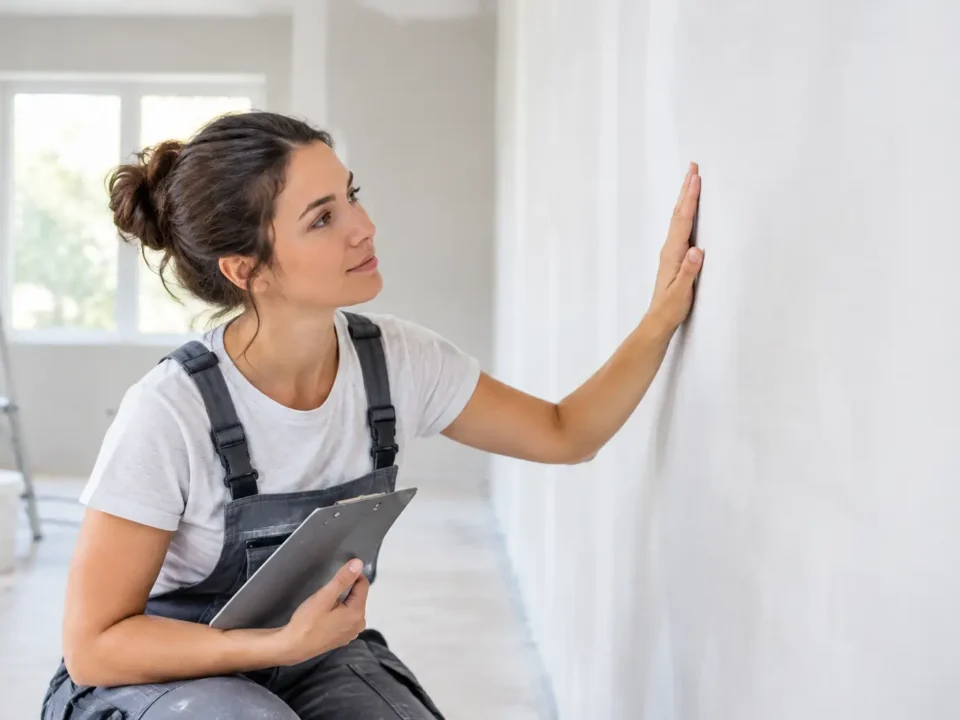
Reliable ceiling refinishing starts with a close inspection, not a quick coat of paint. The condition of the drywall, seams, texture, stains, and previous repairs determines the scope of work.
The work area is then protected to control dust and keep the surrounding space clean. Fixtures may need to be covered or removed, and access points should be planned before repair begins. This matters in occupied homes, active commercial spaces, rental turnovers, and renovation projects where other trades are working nearby.
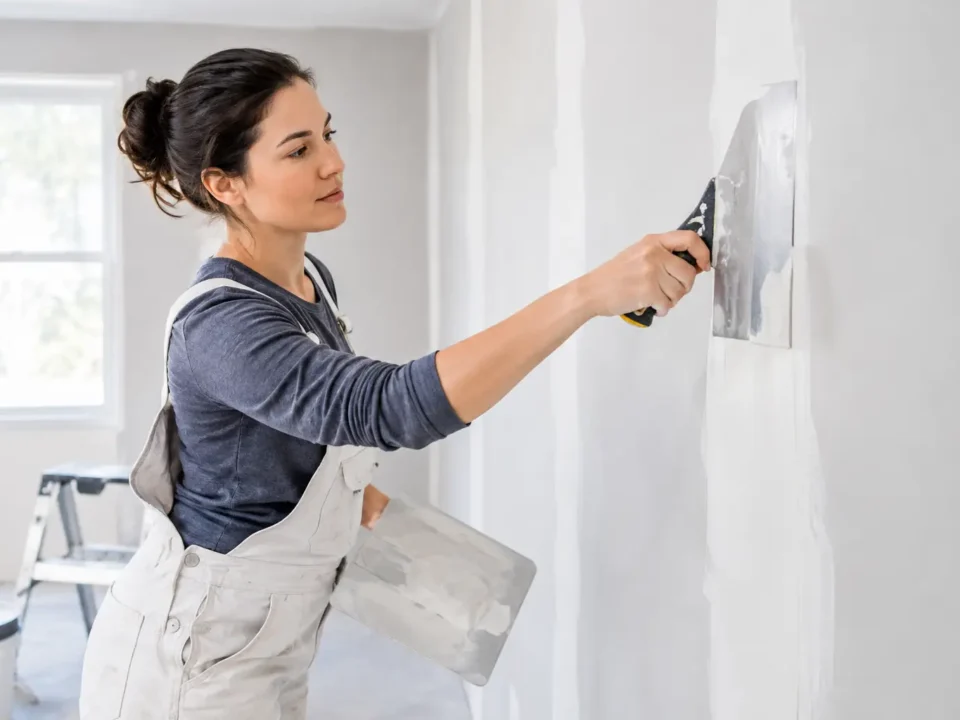
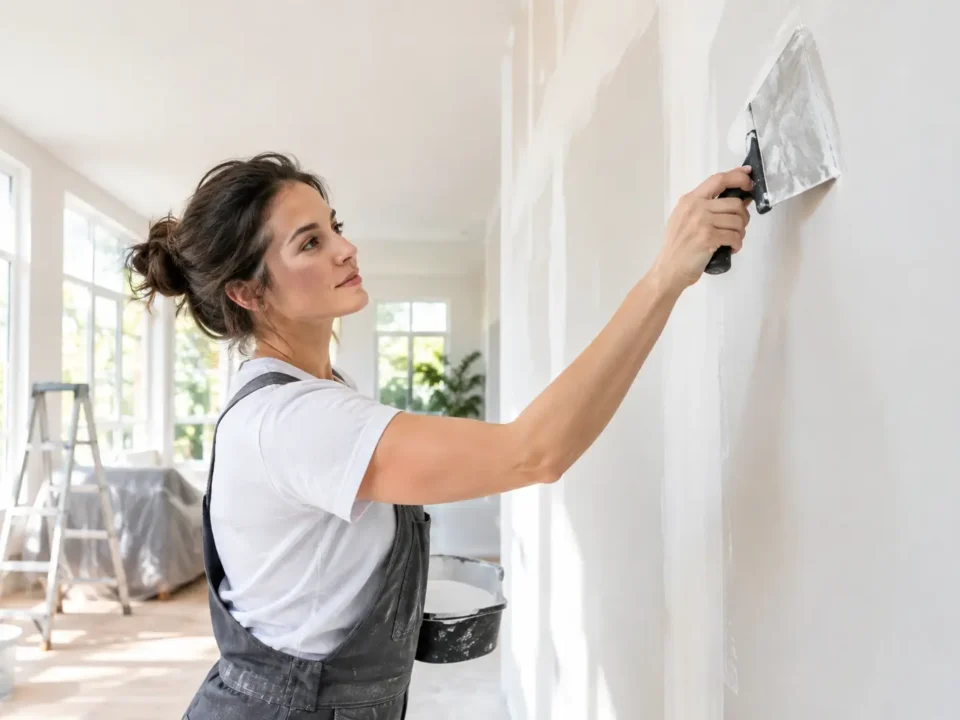
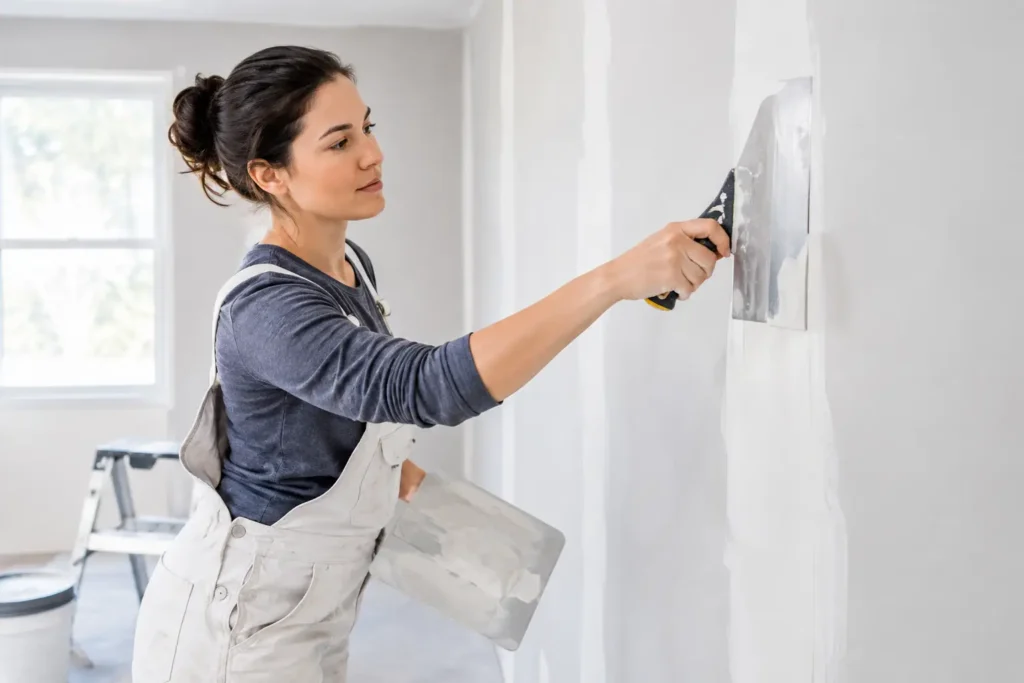
Next comes repair and surface preparation. Loose material is removed, damaged drywall is patched or replaced, cracks are reinforced as needed, and seams are taped correctly. Joint compound is applied in controlled coats, allowing proper drying time between applications. Rushing this stage can lead to shrinkage, flashing, cracking, or visible joint lines later.
Sanding follows once the compound has cured. The goal is not to sand aggressively, but to create an even plane without scarring the drywall paper or leaving edges around repaired areas. Dust control is essential here, especially in furnished properties and occupied buildings.
Finally, the ceiling is checked under practical lighting conditions before primer and paint. A high-quality primer helps create consistent paint absorption, particularly where new compound and old painted surfaces meet. It also helps prevent repaired sections from appearing dull or different after the finish coat is applied.
Common Shortcuts That Create Bigger Problems
Painting directly over stains, popcorn texture, or poorly finished seams may improve the room briefly, but it does not solve the underlying issue. Paint cannot flatten a raised tape joint, secure loose drywall, or stop moisture from returning.
Another common shortcut is applying one heavy coat of compound to fill a large flaw. Thick applications take longer to dry and can shrink or crack. Several properly applied coats produce a flatter, more durable result.
DIY repairs can make sense for a very small nail hole or minor touch-up. Ceiling work becomes less forgiving when the repair is broad, the surface is textured, the damage involves moisture, or the room has strong lighting. In those cases, professional taping and finishing often saves time, repainting, and frustration.
Planning Your Project Around Paint, Lighting, and Use
Before refinishing begins, think about what will happen in the room afterward. If recessed lights, pendant lights, ceiling fans, or crown molding are being added, it is usually more efficient to coordinate those changes before the final paint stage. New electrical openings and fixture work can create avoidable repair work if they are done after the ceiling is finished.
Paint sheen also matters. Flat ceiling paint hides minor variation better than higher-sheen products. A smooth ceiling with a satin or semi-gloss sheen will show far more surface detail, which may call for a higher finishing standard.
For rental properties and commercial spaces, timing can be just as important as appearance. Scheduling repairs between tenants, before final cleaning, or alongside a larger renovation can reduce disruption. TH Taping works with both complete projects and smaller urgent repairs, helping clients in Niagara Region, St. Catharines, and Hamilton address the ceiling work that cannot wait.
A ceiling should disappear into the room for the right reason: because it looks clean, even, and professionally finished. When texture, stains, cracks, or old repairs keep pulling attention upward, refinishing is a practical way to restore the space and make the final paint job look like it belongs there.