
Popcorn Ceiling Removal Cost Explained

When a Level 5 Drywall Finish Makes Sense
13 mayo, 2026
How to Remove Popcorn Ceiling Safely
14 mayo, 2026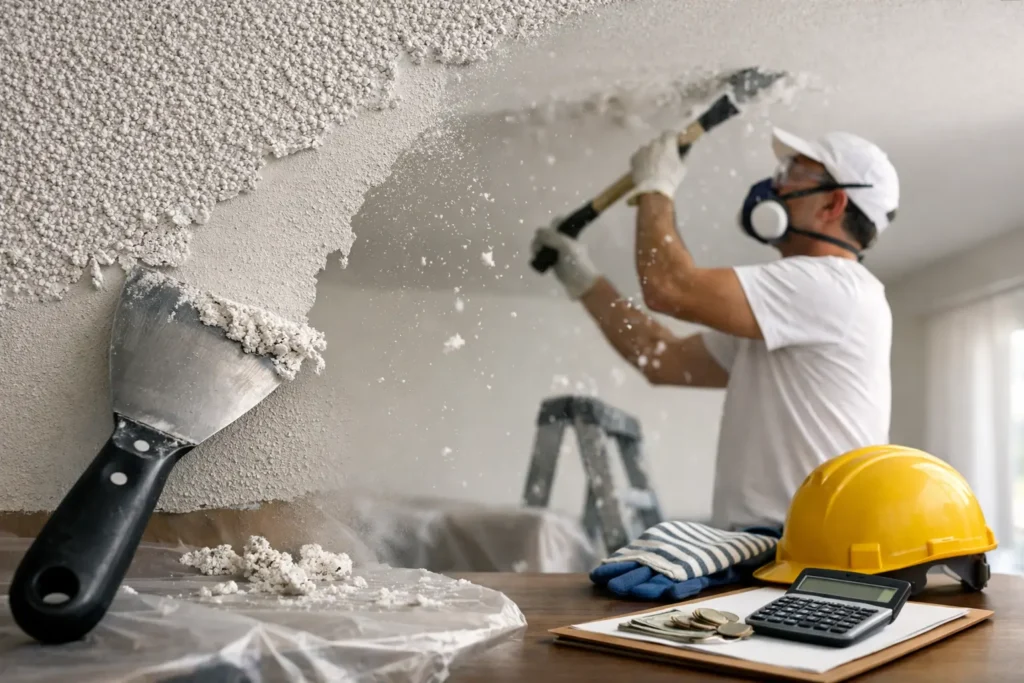
If you are staring at an outdated ceiling and wondering what the popcorn ceiling removal cost will really look like, the short answer is this: most projects are priced by square foot, but the final number depends on prep, repairs, testing, and the finish you want when the texture is gone.
That is where many estimates start to separate. Removing the texture is only one part of the job. What comes next – skim coating, patching, sanding, and getting the ceiling ready for paint – often has just as much impact on price as the removal itself.
What affects popcorn ceiling removal cost
The size of the room matters, but it is not the whole story. A simple, empty bedroom with easy access is faster and cleaner to handle than a furnished living room with light fixtures, high ceilings, and old damage hidden under the texture.
In most cases, contractors look at square footage first. Then they adjust for labor conditions. Ceiling height, the age of the home, the thickness of the texture, and whether the ceiling needs a smooth finish all affect the quote.
If the popcorn texture was painted over, removal can take more time. Painted texture often does not scrape off as easily, which means extra labor and sometimes more aggressive surface repair afterward. That added time shows up in the estimate.
Another major factor is protection and cleanup. Popcorn ceiling work is messy when done properly. Floors, walls, fixtures, vents, and furniture need to be protected. For occupied homes, careful containment matters just as much as the ceiling work itself.
Typical price range per square foot
For homes without asbestos concerns, popcorn ceiling removal cost commonly falls between about $1 and $3 per square foot for basic removal. If the project also includes skim coating or creating a smooth ceiling finish, pricing often lands closer to $2 to $5 or more per square foot.
That range is wide for a reason. Basic scraping is one level of service. A ceiling that looks clean, flat, and ready for paint is another. Many homeowners compare quotes without realizing they are not comparing the same finish standard.
A low quote may only include removing loose texture. A more complete quote may include patching seams, correcting imperfections, applying compound, sanding, and leaving the ceiling ready for primer and paint. The second option usually costs more, but it also avoids the disappointment of an uneven surface once the room lighting hits the ceiling.
For larger spaces, the per-square-foot cost may improve slightly because setup and cleanup are spread across more area. Smaller jobs sometimes carry a higher effective rate because the crew still needs to prep, protect, and clean the space even if the ceiling area is limited.
Why ceiling condition changes the price
Popcorn ceilings often hide flaws. Once the texture is removed, tape joints, patches, nail pops, water stains, and older repair work can become visible. That is one of the biggest reasons a final quote may include repair allowances.
If the drywall underneath is in good condition, the project moves faster. If there are damaged seams or uneven boards, more finishing work is needed before the ceiling can look right. This is especially true if you want a smooth ceiling instead of a light texture.
Smooth ceilings demand more precision. Every imperfection shows. That means more skim coating, more sanding, and tighter quality control. Homeowners who want a premium finish should expect the price to reflect that extra craftsmanship.
Asbestos testing and older homes
If the home was built before the 1980s, asbestos testing may be necessary before removal starts. This is not an optional shortcut. It is a health and safety issue, and it can change both the scope and the cost of the job.
Testing itself is a separate expense, but it is a smart one. If asbestos is present, the removal process becomes far more specialized and expensive. In those cases, abatement rules apply, and the work should only be handled by properly qualified professionals.
Even when asbestos is not present, older ceilings can be more fragile. Previous paint layers, patched sections, or water damage may increase labor. A serious contractor will account for that instead of giving a quick number that does not match real site conditions.
Popcorn ceiling removal cost vs. covering it
Some property owners ask whether it is cheaper to remove the popcorn texture or cover it with new drywall. The answer depends on the existing ceiling condition.
If the ceiling has multiple flaws, heavy texture, or poor substrate quality, overlaying with fresh drywall can sometimes make more sense than scraping and refinishing the old surface. It can create a cleaner final result, especially when the goal is a high-end flat finish.
That said, adding new drywall is not automatically the cheaper route. It adds material cost, changes around trim and fixtures, and still requires taping, finishing, sanding, and painting prep. In some rooms, direct removal is more practical. In others, covering the ceiling can save time and deliver a better finish.
This is where an on-site quote matters. The best option depends on the ceiling, not just the price per square foot.
What is usually included in a professional quote
A solid estimate should be clear about the scope. At minimum, you want to know whether the price covers site protection, texture removal, debris cleanup, minor repairs, skim coat work, sanding, and readiness for paint.
You should also ask what happens if hidden damage is found after the texture comes down. Minor patching is common. Larger drywall repairs may be quoted separately. That is normal, but it should be explained upfront.
For occupied homes, scheduling also matters. Some contractors split the work into phases to reduce disruption. Others complete the removal and finishing in a tighter timeline if access is open and the space can be cleared. Faster turnaround can be valuable, but only if the finish quality stays high.
How to compare estimates without getting burned
The cheapest quote is not always the lowest total cost. If a contractor removes the texture but leaves a wavy ceiling, you may end up paying again for repairs and refinishing.
Ask what finish level you are getting. Ask whether the ceiling will be spot patched or fully skim coated. Ask whether sanding dust will be controlled and how the room will be protected. These details tell you more than the base number.
It also helps to ask whether the contractor regularly handles ceiling finishing, drywall repair, and smooth ceiling work. Popcorn removal is not just demolition. The final appearance depends on finishing skill. That is where experienced drywall specialists tend to stand apart.
When the higher price is worth it
There are times when paying more is the smart move. If the room has strong natural light, ceiling imperfections will show quickly. If the property is being updated for resale, a clean flat ceiling can noticeably improve how modern the space feels. If the work is part of a broader remodel, getting the ceiling right the first time keeps the rest of the project moving.
For property managers and contractors, reliability also matters. A crew that shows up on schedule, protects the site, and delivers a paint-ready finish can save time across the entire job. That value does not always show up in the cheapest estimate.
In markets like Hamilton, St. Catharines, and the Niagara Region, homeowners often want both speed and finish quality. That is reasonable, but it only works when the quote reflects the real scope of the work.
Is popcorn ceiling removal worth the cost?
In many homes, yes. Removing popcorn texture can instantly make a room look cleaner, brighter, and more current. It also makes future repairs, painting, and lighting upgrades easier.
The real question is not whether the texture should go. It is whether the ceiling will look right after it is gone. That is why the finish stage matters so much.
At TH Taping, this is the standard we believe in: not just taking something outdated off the ceiling, but leaving behind a surface that looks intentional, clean, and ready for the next step. If you are pricing your project, the best move is to get a quote based on the actual ceiling condition, the finish you want, and the level of care the room deserves.